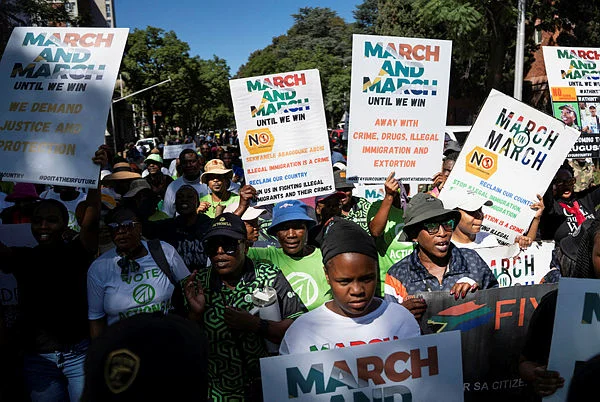
Behind the high gates of the Diakonia Council of Churches in central Durban, rows of mattresses and plastic bags stuffed with clothes mark the latest chapter in South Africa’s recurring battle with xenophobic violence. Around 250 foreign nationals, most of them women and children, have crowded into the church centre, saying they no longer feel safe in their own neighbourhoods.
They began arriving after local groups escalated a campaign targeting undocumented migrants, marching through communities and demanding that foreigners leave the country by the end of the month. Activists have circulated videos and messages on social media, warning that those who stay risk violent reprisals. Though the threats have no legal standing and authorities have not endorsed them, they have spread fear among migrant communities already living on the margins.
Among those sheltering at Diakonia is Miriamu Mokonzi, who fled conflict in the Democratic Republic of Congo’s Kivu region. She says men came to her Durban home over the weekend, asking when her family would leave. They told her that if they remained, they would be attacked or killed. She gathered her two young sons and joined others heading for the church, carrying only what they could manage.
Durban, a major port and economic hub, has long been a flashpoint for anti-immigrant sentiment. Organised groups, including one styling itself as March and March and parading in traditional Zulu dress with shields and sticks, have accused foreign nationals of driving crime and unemployment. Rights organisations say such claims are often exaggerated or false, but they resonate in impoverished townships and informal settlements where competition for jobs and services is intense.
Several people at the church centre described vigilante-style visits, with groups moving door to door, demanding documents and issuing ultimatums. Some women reported being robbed of phones, cash and household items during these encounters. Others said landlords, fearing trouble, had told them to leave their rooms.
Moses Ombeni, also from the DRC, said those now sheltering together include migrants from Burundi, Rwanda, Uganda and Tanzania. Earlier in the week, he explained, they had tried to seek protection at a local police station. Instead, officers fired rubber bullets and teargas to disperse the crowd, leaving some injured and deepening mistrust between migrants and law enforcement.
South Africa has experienced repeated waves of xenophobic attacks since 2008, when dozens of migrants were killed and thousands displaced. Similar eruptions in 2015 and 2021 were fuelled by economic hardship and political rhetoric blaming foreigners for joblessness and crime. Analysts warn that as political parties court voters ahead of local elections, hardline messages on migration risk igniting yet another cycle of violence.