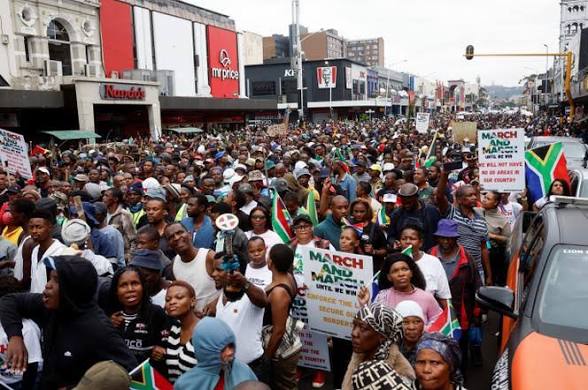
In townships and city centres across South Africa, thousands have poured onto the streets demanding tougher action against undocumented migrants. Organisers of these marches, from Johannesburg to Durban, insist they are defending the rule of law and protecting scarce jobs. Yet for many African migrants, the message feels unmistakably hostile.
Citizen-led groups have become increasingly visible, patrolling neighbourhoods, confronting shop owners and pressuring authorities to conduct immigration raids. Some protesters have issued informal deadlines for foreigners to leave, while others vow to keep up the pressure until government policies harden. Isolated clashes, stone-throwing and looting have been reported, prompting deployments of security forces to contain potential flare-ups.
It is against this tense backdrop that Africanews Debates posed a stark question: Is South Africa still safe for African migrants?
Migration researcher Dr Rebecca Walker told the programme that even in areas where large-scale violence has not erupted, fear is now woven into daily life. She described a climate in which anyone perceived as foreign, including internal migrants from poorer provinces, can become a target. Informal settlements and economically distressed communities, she noted, are particularly volatile spaces where resentment and suspicion easily spill over.
African affairs analyst Jean-Victor Nkolo argued that the current tensions cannot be separated from South Africa’s history and its unfinished struggle over identity and belonging. He urged viewers to see South Africa’s migration story as part of a wider African narrative of cross-border movement, solidarity during the anti-apartheid struggle and the promise of regional integration that followed.
For migrants like Ghanaian accountant Eric Kwame Cosmos, those ideals feel increasingly distant. After more than a decade in South Africa, he is preparing to return home, citing a growing sense of insecurity. He spoke of staying indoors, avoiding public transport and living with constant anxiety over documentation checks and shifting public sentiment.
The debate exposed deep divisions over cause and consequence. Some South Africans link anti-migrant anger to unemployment, inequality and pressure on public services. Others counter that migrants are being scapegoated for structural economic failures, with little credible evidence tying them to rising crime or job losses.
Government officials routinely condemn violence against foreign nationals while promising firmer action on undocumented migration. Analysts warn that this balancing act, and the rhetoric surrounding it, risks legitimising vigilante campaigns and hardening public attitudes.
As marches continue and migrants weigh whether to stay or leave, one question echoes far beyond South Africa’s borders: can the continent’s most industrialised nation remain a place of refuge and opportunity for fellow Africans, or is it becoming a frontline of exclusion in a broader crisis of belonging?