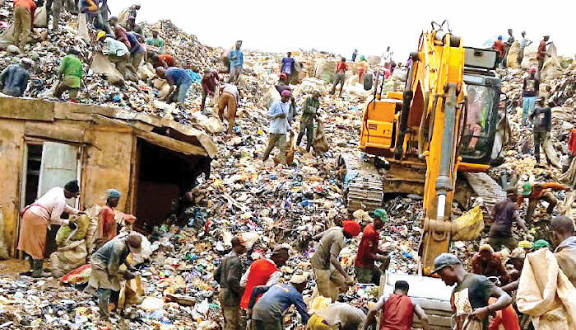
The recent arrest of six individuals in Meiran for illegal dumping has sparked a mixed response among Lagos residents. While some admire the government's decisive action, others express outrage over the circumstances leading to these arrests, and a notable portion remains apathetic about the city's waste management issues.
Among those arrested are a diverse group: 72-year-old Patience Orobatan, 40-year-old Felicia Aja, 20-year-old Sheriff Ogundeji, 40-year-old Titilayo Durorike, 52-year-old Adeola Ononuga, and 60-year-old Adu Bola. Their ages and backgrounds illustrate that illegal dumping is not limited to any specific demographic, igniting conversations about the systemic challenges that lead to such actions.
"It's about time they did something," one resident commented, admiring the government's commitment to a cleaner Lagos. "This is a step towards accountability." However, another voice from the community echoed a sentiment of outrage, questioning, "Why target individuals when the real problem lies in the lack of proper waste management infrastructure?" This divide reflects a broader frustration with the system's failure to provide adequate waste disposal options, leaving some residents with few alternatives.
Investigations following the arrests revealed that none of the individuals could demonstrate registration with the Private Sector Participation (PSP) scheme, which has been criticized for its inefficiencies. "If the government expects us to register, they should make the process easier," remarked a local shop owner, who chooses to remain anonymous. This frustration resonates with many, highlighting a perceived disconnect between government expectations and community realities.
The Lagos State Waste Management Authority (LAWMA) has taken a firm stance against illegal dumping, recognizing it as a significant public health hazard. The transfer of the apprehended individuals to LAWMA's legal team at the Oshodi Taskforce office is seen by some as a necessary warning, while others view it as a harsh penalty for actions born out of desperation. "It's easy to condemn the act, but what about the circumstances that drive people to it?" questioned a community activist, sparking a conversation on the need for more comprehensive solutions.
Commissioner Wahab's call for community involvement in maintaining cleanliness has garnered mixed reactions. Some appreciate the encouragement to report illegal dumping, viewing it as an opportunity for collective responsibility. Yet, others remain apathetic, feeling that such initiatives have been repeated without significant change. "We've heard this before. Will anything actually change?" lamented one disheartened resident.
As Lagos grapples with the complexities of waste management amidst rapid urban growth, the challenge is clear. The government's search for innovative solutions, including public awareness campaigns and enhanced waste collection services, suggests a recognition of the need for change. Yet, as the recent arrests serve as a stark reminder, the responsibility for a cleaner environment lies not only with the government but also with individuals.