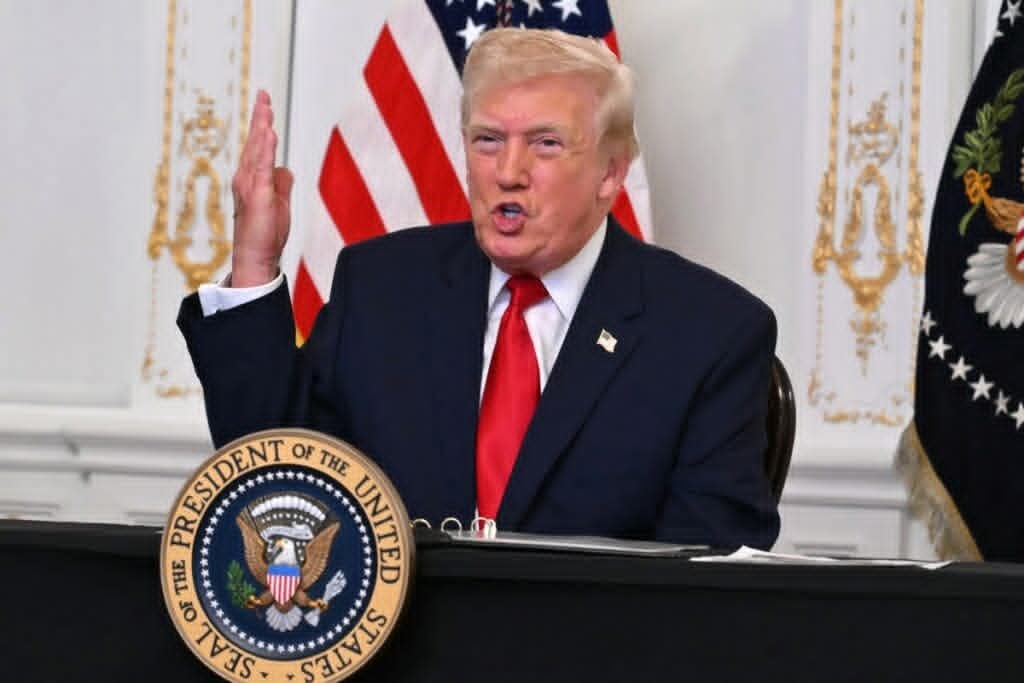
FIFA President Gianni Infantino has defended the decision to award a newly created peace prize to United States President Donald Trump, despite criticism from human rights organisations, politicians and some football stakeholders.
The prize was presented during the draw for the 2026 World Cup in Washington DC. FIFA described it as an inaugural peace award intended to recognise efforts to use football as a tool for international engagement. The organisation cited the Trump administration’s role in facilitating the joint World Cup hosting agreement between the United States, Canada and Mexico as a key factor in the decision.
Opponents of the award argue that Trump’s record on foreign policy, immigration and security conflicts with the concept of a peace-related honour. They contend that FIFA’s move introduces political bias into football governance and downplays concerns about policies and rhetoric viewed by critics as socially and internationally divisive.
Infantino has rejected these objections, stating that the award is limited to what he terms football diplomacy and does not represent an endorsement of the broader political agenda of the recipient. He has positioned the decision as part of a wider FIFA initiative to acknowledge individuals who, in FIFA’s assessment, use football to facilitate dialogue between countries.
In public comments, Infantino has asserted that the decision is justified on objective grounds, linking it to FIFA’s stated aim of supporting any action that can plausibly contribute to peace through sport. He has indicated that the organisation has been considering such recognition mechanisms for some time.
Calls for a boycott of the 2026 World Cup have emerged from some critics, who argue that the tournament could be overshadowed by political controversy associated with the award. Infantino has dismissed these calls, maintaining that football should function as a neutral platform where political divisions are set aside in favour of shared interest in the sport.
He has further argued that, compared with other forms of international commercial and cultural exchange, football is being subjected to disproportionate pressure for boycotts, and that this could undermine the sport’s capacity to bring people together across political lines.
Infantino has also indicated that FIFA will soon address another contentious issue: the status of Russia in international football. Russia has been excluded from FIFA competitions following its invasion of Ukraine. Infantino has suggested that a phased reintroduction, beginning with youth teams, should be considered as a means of reducing isolation rather than reinforcing it.
According to Infantino, the existing ban has not produced measurable progress toward its intended political objectives and may instead have increased resentment. He argues that allowing Russian youth players to participate in competitions abroad could contribute to interpersonal contact and potentially mitigate hostility over the long term.