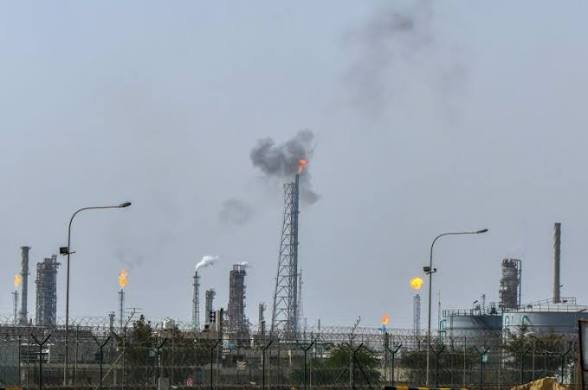
Firefighters in Kuwait battled towering flames and thick black smoke at the Mina al-Ahmadi refinery after Iranian drones struck one of the Gulf’s largest energy facilities, intensifying fears of a wider regional war and a prolonged shock to global energy markets.
The blaze erupted hours after Iranian forces launched a fresh barrage of drones and missiles across the region, defying European appeals to halt attacks on Gulf energy infrastructure. The strike on Mina al-Ahmadi followed a direct hit on Qatar’s Ras Laffan gas complex, a cornerstone of global liquefied natural gas supplies, which authorities say suffered extensive damage.
The latest escalation comes after Iran vowed to retaliate for an Israeli strike that damaged its South Pars gas field, part of the world’s largest known gas reserve. Since then, Iran has unleashed repeated waves of drones and missiles at Israel and its Gulf neighbours, insisting its military capabilities remain intact despite weeks of bombardment and an assassination campaign targeting senior figures.
A spokesman for Iran’s Revolutionary Guards, Ali Mohammad Naini, had boasted that the country’s missile industry “deserves a perfect score” and that production continued even under wartime conditions. Shortly after his comments were published by Iranian media, the Guards announced he had been killed in US-Israeli strikes, underscoring the ferocity of the shadow war now spilling into open confrontation.
Iran’s ability to threaten the Strait of Hormuz, the narrow waterway through which about a fifth of the world’s oil and liquefied natural gas normally passes, has added to market anxiety. Energy analysts warn that sustained damage to facilities such as Ras Laffan and Mina al-Ahmadi could push prices higher for years, fuelling inflation and squeezing consumers far beyond the Middle East.
While Israeli Prime Minister Benjamin Netanyahu has suggested the conflict could end sooner than many expect, he has also hinted that any effort to fundamentally weaken Iran’s leadership would require a “ground component,” raising the spectre of a broader military campaign.
Across the region, the violence has cast a pall over religious holidays, with families in Lebanon, Iran and the Gulf marking normally festive occasions amid displacement, economic strain and the constant threat of further strikes. Diplomatic efforts, including French proposals for a future security framework in the Strait of Hormuz, remain contingent on a halt to the fighting that shows little sign of arriving.