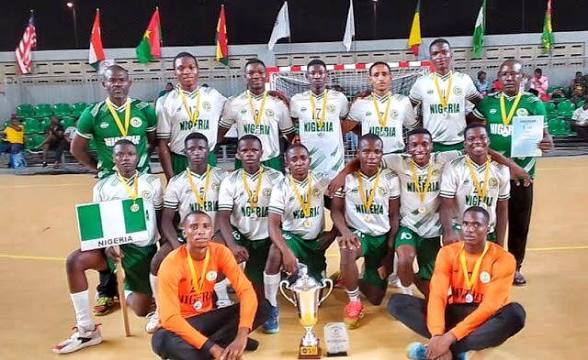
Nigeria’s U18 and U20 men’s handball teams have arrived in Lomé, Togo, to contest the IHF Trophy Africa Zone 3 championship, with both squads targeting qualification for the continental phase of the competition.
The IHF Trophy, organised by the International Handball Federation for emerging handball nations, serves as a crucial pathway for youth teams seeking exposure, higher-level competition and a route to global events. Zone 3 covers West African countries, and the winners in each age category will advance to the continental stage, where they can compete for places at world tournaments.
Officials of the Handball Federation of Nigeria confirmed that the teams completed intensive training camps before departure, focusing on tactical discipline, physical conditioning and improving chemistry among players drawn from different clubs and academies. Coaches and federation staff have repeatedly stressed that this generation is being groomed not just for age-grade success but as a pipeline for the senior national team, the Golden Arrows.
In the U18 event, Nigeria have been drawn in Group B alongside Benin, Burkina Faso and Niger. Group A contains hosts Togo, Ghana and Ivory Coast. The Nigerian squad lists Friday Shuaibu, Shaibu Mohammed, Aliyu Rufai, Sani Muntari, Usman Umar, Godstime Michael, Huzaifa Abdulkadir, Chidebere Davine, Hamza Yahaya, Mohammed Yahaya, Umar Mohammed, Abubakar Abdullahi, Akibu Mohammed and Obeze Akunebu. They are handled by coaches Abdulhakim Yakubu and Ayo Joshua, who are expected to blend speed with aggressive defending.
At U20 level, Nigeria again find themselves in Group B, where they will face Ivory Coast and Burkina Faso. Group A features Ghana, Benin, Togo and Niger. Head coach David Emmanuel and assistant coach Cole Olatunde lead a squad assembled from domestic clubs and Nigerian players based in neighbouring countries, with an emphasis on height in defence and quick transitions in attack.
Across Africa, the IHF Trophy has become a testing ground for federations seeking to close the gap on traditional handball powers. For Nigeria, strong performances in Lomé would reinforce the country’s growing reputation in the sport and offer young players a rare chance to compete under international pressure, with continental qualification and long-term national team futures at stake.