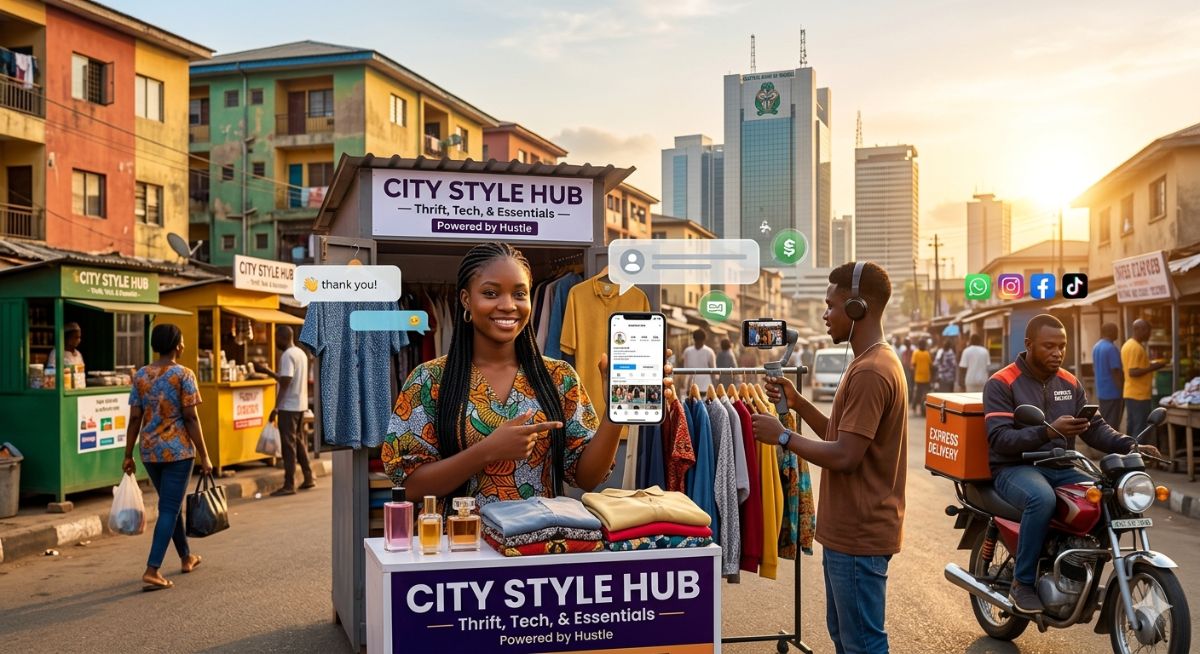
In recent years, small businesses have evolved from side hustles into survival systems for millions of Nigerians. Across cities and towns, young entrepreneurs are building brands from their smartphones, bedrooms, roadside kiosks, and social media pages — often with little capital but enormous determination.
What was once considered “temporary hustling” has gradually become one of the strongest driving forces behind economic survival and youth empowerment.
The rise of digital platforms has played a major role in this transformation. Applications like WhatsApp, Instagram, Facebook, and TikTok have become modern marketplaces where products are advertised, negotiated, and sold daily. Many business owners no longer need physical shops to reach customers. A good product, consistency, and visibility online are now enough to start building a customer base.
This shift became even more noticeable during periods of economic instability. Rising unemployment, inflation, and the increasing cost of living pushed many young people to seek alternative sources of income. For some, business was not initially driven by passion but by necessity. Yet out of that necessity came innovation.
From thrift fashion vendors and perfume brands to food delivery services and tech-based solutions, small-scale enterprises are solving real-life problems while creating income opportunities for others. Delivery riders, graphic designers, content creators, photographers, and online marketers have all become part of a growing ecosystem powered by entrepreneurship.
However, running a small business in Nigeria still comes with significant challenges.
Access to funding remains limited for many entrepreneurs, especially young people without collateral or financial backing. Inconsistent electricity supply, unstable internet services, high transportation costs, and fluctuating market prices continue to affect productivity and profit margins. Customer trust is also another major hurdle in an era where online scams have made buyers more cautious.
Despite these obstacles, resilience remains one of the defining characteristics of Nigerian entrepreneurs.
Many business owners have mastered the art of adaptation. They adjust pricing strategies, improve customer relations, leverage social media trends, and explore creative marketing techniques to stay relevant in competitive markets. Some businesses that started with a single product now operate as recognized brands with loyal customer communities.
Experts believe that supporting small businesses could significantly strengthen the country’s economy. Increased access to grants, affordable loans, digital training, and better infrastructure would not only help entrepreneurs grow but also reduce unemployment rates among young people.
Beyond profit, small businesses are gradually reshaping the mindset of an entire generation. More young people are beginning to value ownership, creativity, and financial independence. Entrepreneurship is no longer viewed only as an alternative option — for many, it has become the primary path toward stability and growth.
In today’s Nigeria, small businesses are doing more than selling products.
They are creating opportunities where none existed, proving that even in difficult economic conditions, innovation and determination can still build something meaningful.