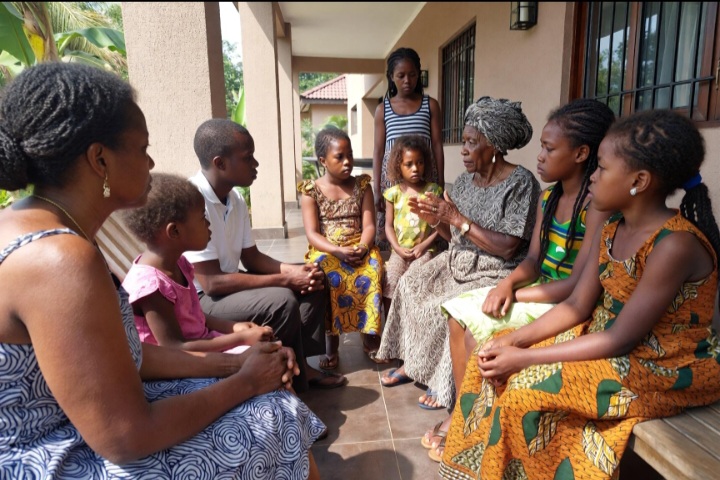
Imagine growing up and being unable to have a proper conversation with your grandparents in the language they grew up speaking.
You may understand a few words. You may know some popular expressions. You may even understand when someone is speaking the language around you.
But when it is your turn to speak, you suddenly realise you don't know how.
This is becoming increasingly common.
Nigeria is incredibly diverse linguistically, with hundreds of indigenous languages spoken across different communities. These languages are not merely tools for communication. They are part of our cultural identity.
A language carries history.
It carries humour.
It carries traditional wisdom.
It carries the way our grandparents expressed affection, anger, respect and even sarcasm.
There are certain things that simply sound different in your mother tongue.
A proverb translated into English may communicate the basic meaning, but something about the original expression is lost.
The problem is that many children are growing up in environments where indigenous languages are used less frequently.
Some parents deliberately speak English at home because they believe it will help their children communicate better or perform better academically.
Some children themselves prefer English because it is the dominant language in school, social media and popular culture.
And gradually, the local language becomes something they understand but cannot confidently speak.
This matters because languages can disappear when younger generations stop using them.
Preserving indigenous languages does not mean refusing to learn English, French or other international languages. In fact, there is nothing wrong with being multilingual.
A child can speak English fluently and still speak Yoruba, Igbo, Hausa, Efik, Tiv, Ijaw or another indigenous language.
Parents can encourage children to speak their local language at home. Grandparents can teach them traditional expressions and stories. Schools and communities can create opportunities for children to learn and use indigenous languages.
Technology can help too.
Young people can create content in their local languages. Music, films, podcasts, social media videos and books can all make indigenous languages feel relevant to younger generations.
Because a language does not have to disappear simply because the world is changing.
We can modernise without erasing our identity.
We can become global citizens while still knowing the language our grandparents used to call our names.
Preserving a language is preserving a piece of ourselves.