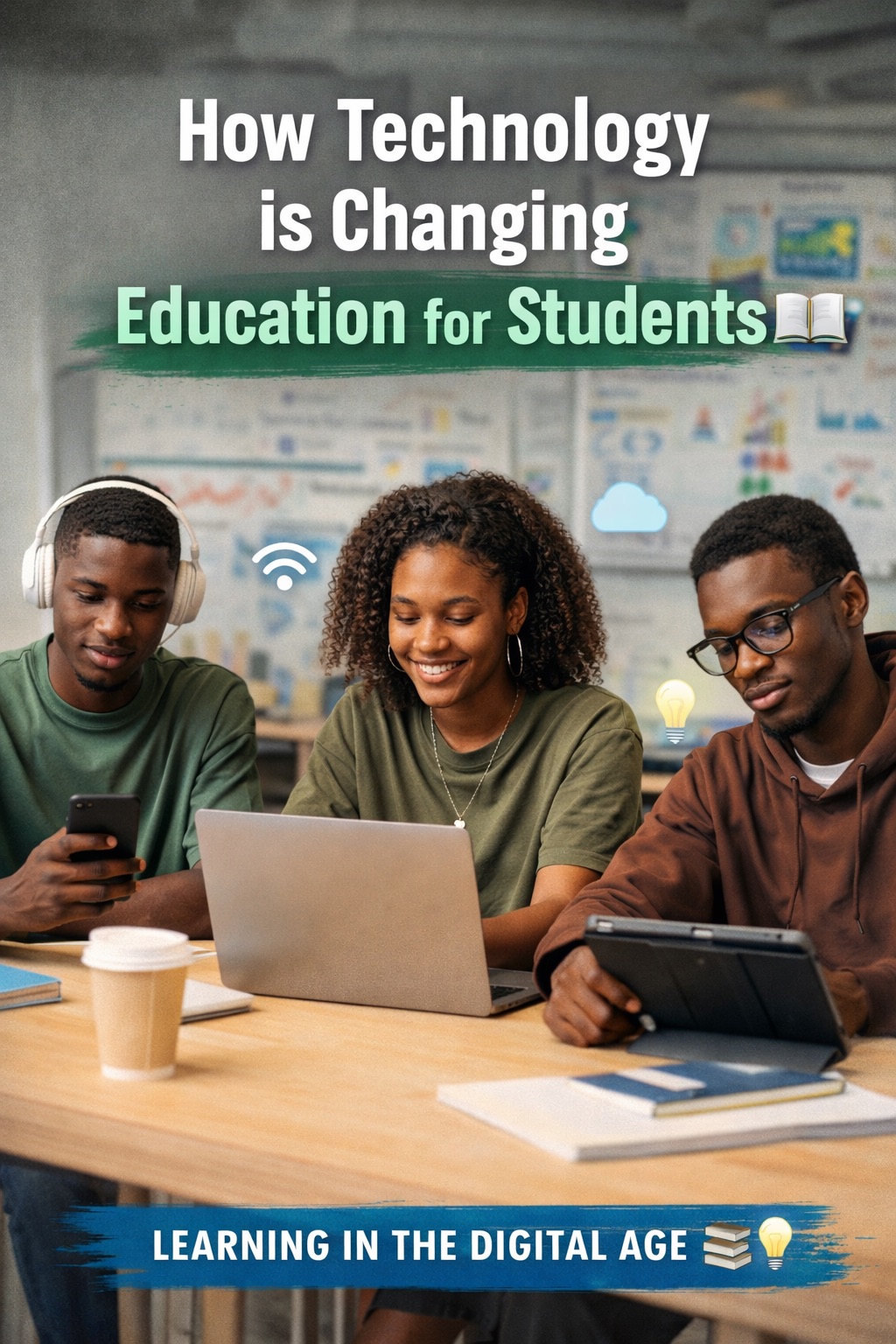
Imagine trying to complete an assignment today without using the internet, a smartphone, or a laptop. For most students, that would be almost impossible. Technology has become a major part of education and it continues to change the way students learn every day. From online classes to educational apps and digital libraries, technology has made learning faster, easier, and more accessible than ever before.
Not too long ago, students depended mainly on textbooks and physical libraries for information. Today, with just a few clicks, students can access thousands of articles, videos, and research materials online. This easy access to information helps students learn more about different topics and expand their knowledge beyond what is taught in the classroom.
Technology has also introduced new ways of learning through online platforms. Many schools and universities now use tools like Google Classroom and other learning systems to share lecture materials, assignments, and announcements. Students can attend virtual classes, submit their work online, and communicate with their lecturers more easily. This became especially important during the COVID-19 pandemic when many schools around the world moved to online learning.
Another interesting change technology has brought to education is interactive learning. Instead of only listening to lectures or reading textbooks, students can now learn through videos, online tutorials, digital presentations, and educational apps. These tools make learning more engaging and help students understand difficult concepts in a simpler way.
However, while technology has many advantages, it also comes with some challenges. Students can easily become distracted by social media, games, or other online activities while studying. In addition, not every student has equal access to the internet or digital devices. Because of this, it is important for students to use technology wisely and focus on its educational benefits.