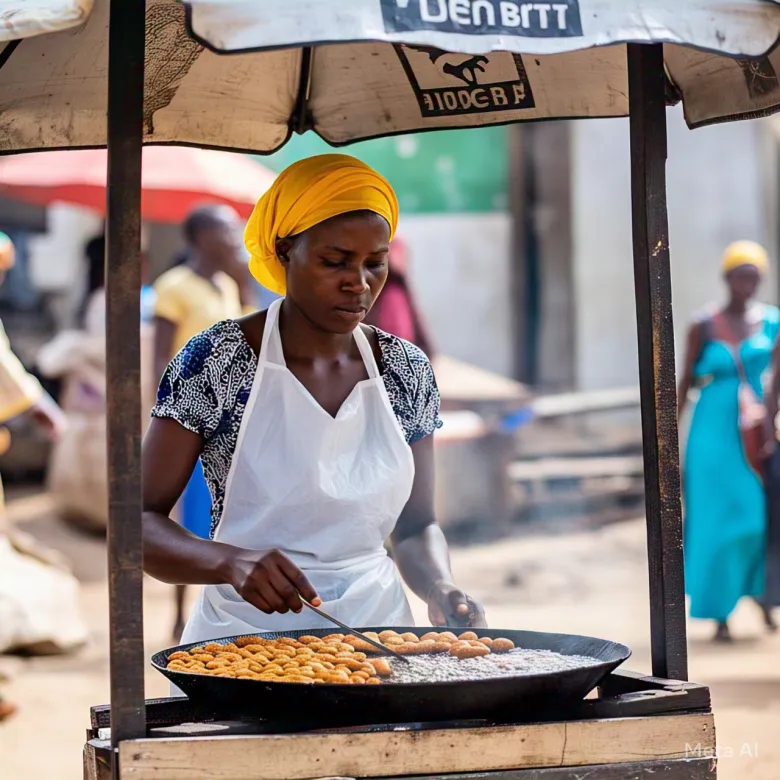
The first sign that morning had arrived in Umuobi Street wasn’t the crowing rooster or the buzzing of keke napep engines—it was the sizzling sound from Mama Nneka’s akara pan.
By 4:30 a.m., her stall, a patched-up wooden frame with a faded umbrella that once bore the logo of a long-defunct bank, was already alive. The smell of onions, pepper, and freshly ground beans wafted through the sleepy street like an alarm clock for the hungry.
Mama Nneka wasn’t just selling akara and pap. She was serving hope on paper plates.
She had lived in this neighborhood for as long as anyone could remember. People said she came here with nothing but a baby tied to her back and a burnt face. Now, her stall fed bricklayers, okada riders, tailors, students, and even the landlord's son who always said, “God bless you, Ma,” after every N500 breakfast.
Her hands were fast. She flipped the akara balls like an artist, never burning a single one. And her pap? Not too thick, not too watery, just the right texture, warm, and sweet—like a mother’s hug in liquid form.
But life wasn’t easy.
Her daughter, Adaeze, was in her final year at UNN. Mama Nneka paid the school fees with sweat and sachet water. Her youngest, Chisom, had sickle cell and needed monthly hospital visits. The stall was all she had. No pension, no insurance. Just a prayer whispered over hot oil and a silent deal with God each dawn: “Let me sell enough today. Just enough.”
She smiled through backaches, through rainy days that turned the street to mud, through customers who owed from last week but still returned for more. She was patient, not because she had no choice, but because she believed everyone was fighting their own battles.
At 10:00 a.m., just before she packed up, a small boy in school uniform ran up to her. He looked around, then whispered, “Aunty say make I tell you thank you for yesterday.”
Mama Nneka only nodded.
She knew what he meant. Yesterday, she’d slipped an extra puff-puff into his nylon. She had seen the way his eyes lingered when his Aunty told her “Just two for him abeg.”
That was how Mama Nneka changed lives. Quietly. One spoon of pap at a time.
And when the sun rose high and the city moved on with its hustle, she packed up her things, wiped sweat from her brow, and walked home—her back slightly bent, but her spirit standing tall.
Because in her little corner of Umuobi Street, she mattered.
And every day, she proved that even street vendors carry the weight of the world—with grace, fate, and a golden frying pan. Not golden because of its colour, but because of it's worth.