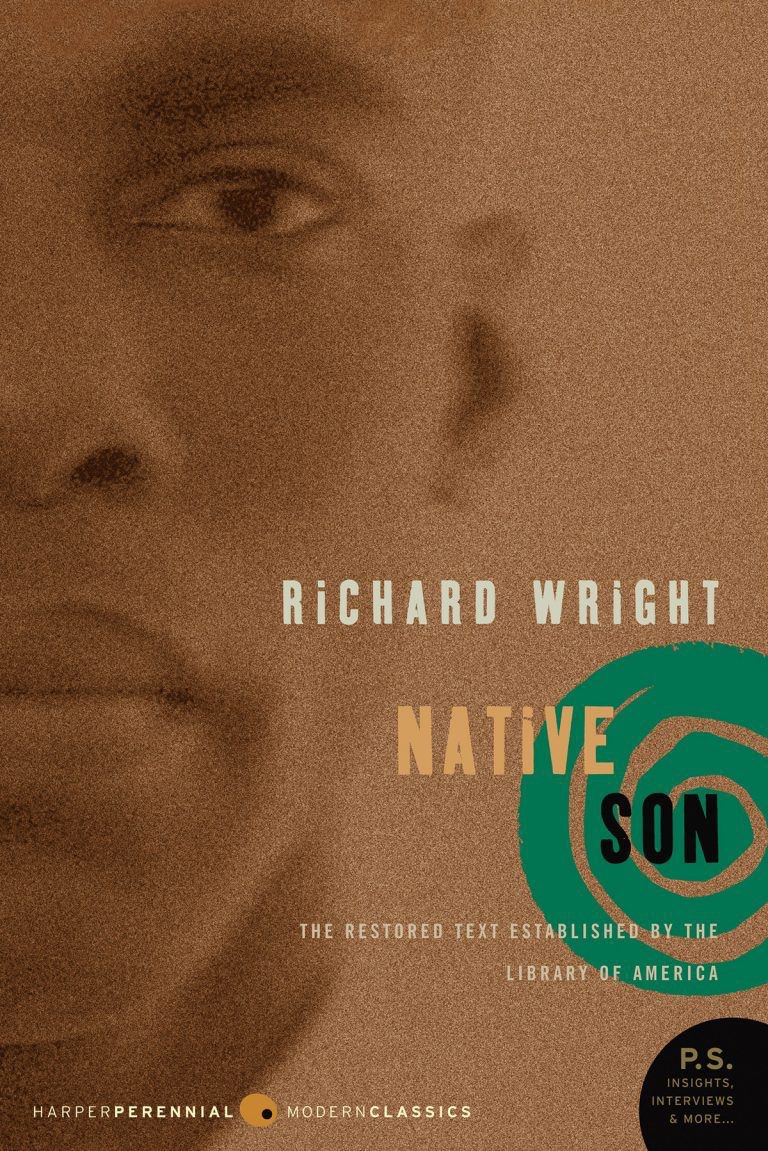
The Uncomfortable Mirror: Why “Native Son”Still Screams
There are books you read, and then there are books that read “you”. Richard Wright’s “Native Son” is the latter. From its shocking opening to its devastating finale, it doesn’t just tell a story, it conducts a brutal, unflinching autopsy of the American psyche. Decades after its publication, its scream still echoes, a raw and necessary sound in an ongoing conversation about race, fear, and justice.
Book Information:
* Title:Native Son
* Author:Richard Wright
* Publication Details:First published by Harper & Brothers in 1940.
* Structure:The novel is divided into three deliberately named sections: "Fear," "Flight," and "Fate." My edition runs to 504 pages.
* Accessibility:Widely available as a paperback, ebook, and audiobook, typically priced between $10-$16/ 14,000-23,200 in Nigeria currency
A Brief, Blinding Summary:
Set in the suffocating poverty of Chicago’s South Side in the 1930s, the novel follows twenty-year-old Bigger Thomas, a Black man trapped in a social cage. When he takes a job as a chauffeur for a wealthy white family, the Daltons, a tense and accidental act of violence sends his life spiraling into chaos. What follows is less a standard crime thriller and more a harrowing exploration of the psychological and societal forces that shape, and ultimately crush, Bigger’s destiny. The themes are colossal: the dehumanizing effects of systemic racism, the cycle of fear and violence, and the search for identity in a world that refuses to see you as fully human.
This book doesn’t gently tug at your heartstrings; it seizes them. Reading “Native Son”is a profoundly visceral experience. I felt claustrophobia in Bigger’s one-room apartment, dizzying terror during his flight, and a complex, unsettling pity that defies easy sympathy. Wright forces you into Bigger’s mind, making you a witness to the rage and desperation born from perpetual powerlessness. The moment Bigger realizes his accidental crime grants him a perverse, terrifying sense of “purpose”for the first time is one of the most psychologically arresting scenes I’ve ever encountered. It’s horrifying, yet Wright makes you understand the twisted logic of it. You are not asked to approve, but to “comprehend”.
Structure and Style: A Masterful Cage:
Wright’s style is deliberate, relentless, and naturalistic. The prose is stark and powerful, building an atmosphere of inevitable doom. The three-part structure—“Fear,” “Flight,” “Fate”—is itself a thesis, tracing the predetermined path society has laid for Bigger. The characters are less nuanced individuals and more archetypes locked in a social drama: Bigger as the brutalized and brutalizing product of his environment; the Daltons as representatives of well meaning but tragically blind liberalism; and Boris A. Max, the communist lawyer, who provides the novel’s explicit ideological framework in its final third.
The dialogue, especially the vernacular of Bigger and his friends, grounds the story in a raw reality, while the omniscient narration delves deep into the torment of Bigger’s consciousness. Wright’s imagery is relentless—the looming “No. 5” furnace, the ubiquitous white cat in the Dalton home, the blinding Chicago snow—all serving as symbols of fear, judgment, and the cold, inescapable system.
Reflections and Rough Edges:
As a whole, “Native Son”is a monumental, if sometimes punishing, work. Its greatest strength—its uncompromising focus on sociological and psychological forces—can also be a point of critique. Some characters, particularly Mary Dalton and her communist boyfriend Jan, can feel more like ideological mouthpieces than fully realized people. The lengthy courtroom speech by Max, while intellectually vital to Wright’s argument, can feel like a dramatic slowdown, swapping visceral narrative for legal and philosophical rhetoric. Some modern readers may find the determinism overwhelming, questioning if Bigger is allowed any true agency at all. But perhaps that’s precisely Wright’s point: the system is designed to strip that agency away.
Closing Thought and Recommendation:
I recommend “Native Son”not because it is an enjoyable read, but because it is an essential one. It is a cornerstone of American literature, a novel that stares into the abyss of racial hatred and fear without blinking. You will not “like” Bigger Thomas in a conventional sense, but you will be forced to confront the world that made him.
I enjoyed this book for its sheer, unassailable power and its courage. Anyone interested in understanding the roots of American racial trauma, the power of protest literature, or simply in experiencing a masterclass in sustained tension and tragic narrative should read it. It is a difficult, urgent, and unforgettable mirror.
Rating: 4/5 stars – A brutal, necessary classic.


