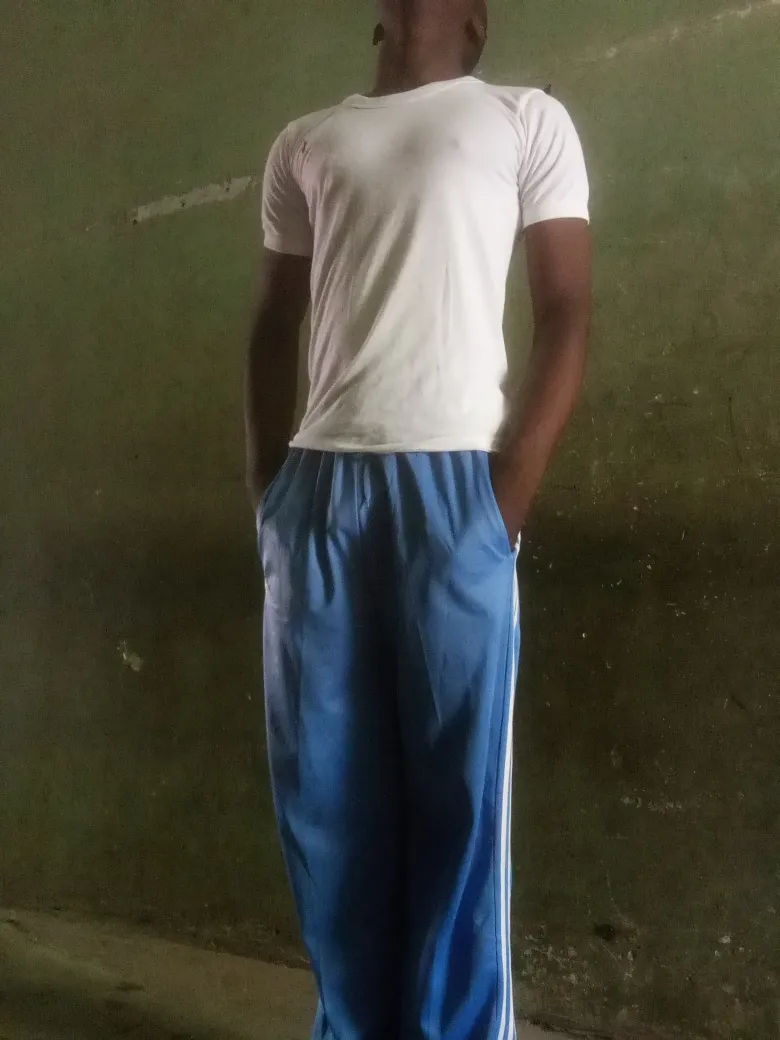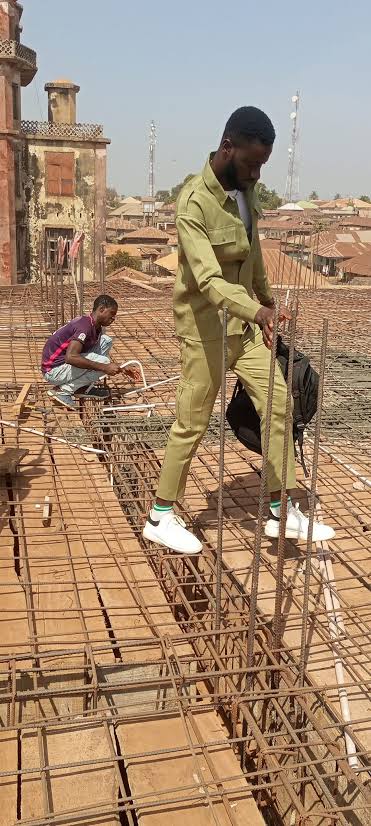
A serving member of the National Youth Service Corps NYSC has stirred conversation across social media after filming a labourer at a construction site dressed head to toe in the iconic NYSC uniform.
In the short clip the corps member can be heard reacting in disbelief as he zooms in on the worker who is busy mixing concrete and hauling blocks while wearing the full khaki kit. The man at the site appears unconcerned focused on his task as the camera captures the familiar crested vest and trousers now stained with cement and dust.
The corps member who said he had long dreamed of serving in the scheme expressed how surreal it felt to see the uniform used as work clothes. According to him he had struggled for years to gain admission into a higher institution and complete his studies just to earn the right to wear the NYSC outfit only to later find it being worn casually on a building site.
His reaction struck a chord with many young Nigerians who view the NYSC uniform as a symbol of achievement and national service. For countless graduates the khaki kit represents years of academic effort the pride of passing through university or polytechnic and the hope of better opportunities after service.
The video also reignited debate about what happens to NYSC uniforms after service and how easily they find their way into markets and second hand clothing stalls. Some commenters argued that once service is over former corps members often sell or give away their kits which then end up being used as everyday work wear by artisans and labourers.
Others saw the scene as a quiet commentary on the country’s economic realities. To them the image of a construction worker in NYSC khaki underscored how symbols of aspiration can be reduced to survival tools in a harsh job market where both graduates and non graduates struggle to make ends meet.
While many viewers found humour in the corps member’s playful complaint others said the moment should prompt reflection on the value placed on education and the expectations tied to the NYSC scheme in a changing Nigeria.