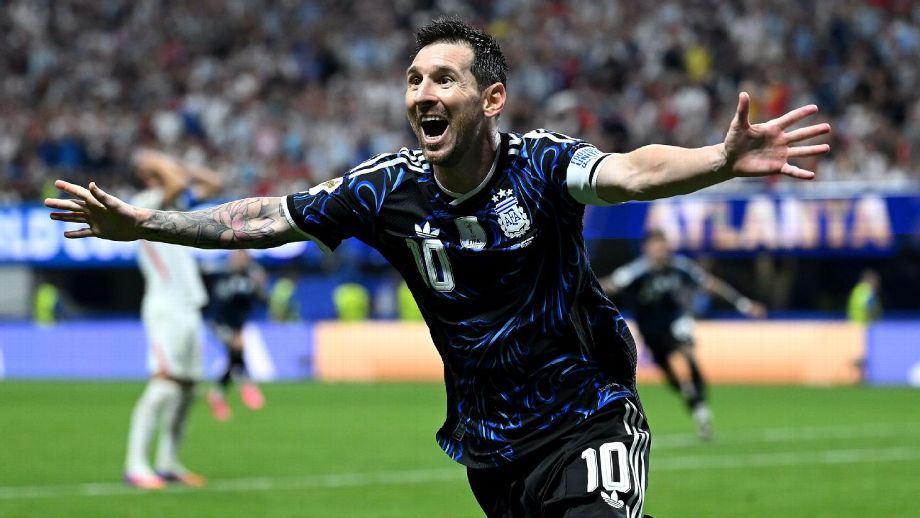
Argentina’s latest World Cup epic against England did more than book a place in the final against Spain. It redrew the record books around Lionel Messi, placing him statistically ahead of some of the greatest names ever to play the tournament.
In the 2-1 semifinal comeback, Messi did not score, yet he shaped the match with two late assists, first for Enzo Fernández and then for Lautaro Martínez. Those contributions pushed him to 33 direct goal involvements in 33 World Cup games, a staggering return of 21 goals and 12 assists. No one else comes close in the modern statistical era: Kylian Mbappé, already a phenomenon, stands at 25.
Messi’s creative dominance is even more striking. He now has 10 assists in World Cup knockout matches, more than double the next-best figures on record, with Pelé and Antoine Griezmann each on four. In the broader World Cup landscape, Messi’s 10-4 edge over Pelé in knockout assists underlines how the Argentine has redefined the role of a superstar forward, functioning as both finisher and primary playmaker on the sport’s biggest stage.
His influence with the ball at his feet is historic. Messi has created 99 chances at World Cups, the most in the last six decades. Diego Maradona, long the benchmark for Argentine genius, is second with 71. One more key pass will take Messi to a century of chances created, extending a 99-71 gap that symbolically mirrors the passing of the creative torch from one era to another.
The semifinal offered a microcosm of that control. Messi completed nine dribbles, covered 8.35 km, and generated 0.86 expected assists, more than the entire England team. He won 12 duels, his highest total in a World Cup match since his mid-twenties, and extended his streak of scoring or assisting to 11 consecutive World Cup games.
At 39, Messi also became the oldest outfield player ever to appear in a World Cup semifinal. If he steps onto the pitch in the final, he will join Cafu as only the second man to play in three World Cup finals, carrying with him a statistical legacy that now surpasses Mbappé, Pelé and Maradona in key measures of World Cup impact.