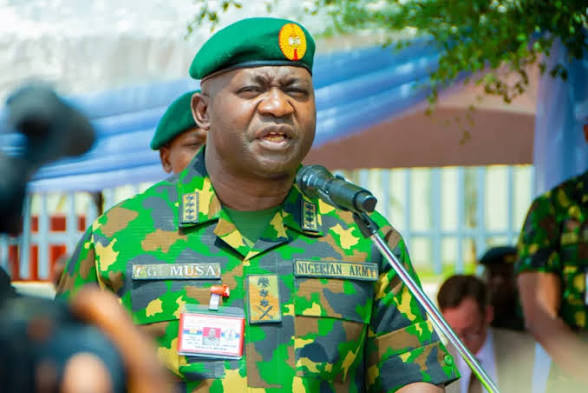
Nigeria’s Minister of Defence, General Christopher Musa, has warned that the country’s security crises tend to worsen in election seasons, arguing that political actors and external sponsors deliberately inflame violence to weaken sitting governments.
In a wide-ranging television interview, Musa described Nigeria’s security environment as a “war” against a determined enemy that is both ideologically driven and materially supported from outside the country. He stressed that many of the groups behind attacks are not simply bandits or criminals, but networks with political and strategic objectives.
According to the Defence Minister, one of the most dangerous factors fuelling the conflict is insider collaboration. He said informants embedded in local communities routinely pass sensitive information to armed groups, including troop strength, movement patterns and vulnerabilities.
“These same individuals that people see as civilians are the ones telling them that this unit has only twenty soldiers,” Musa said, explaining that such leaks allow attackers to mass overwhelming numbers against isolated military positions, sometimes arriving “over 200 strong.”
Musa also highlighted the growing lethality of Improvised Explosive Devices, noting that many of the military’s casualties now come from roadside bombs rather than direct firefights. He cited the recent death of a commanding officer in Monguno as an example of how IEDs are being used to devastating effect against security forces.
Beyond the battlefield, Musa drew a direct line between spikes in violence and the political calendar. He argued that some actors deliberately orchestrate attacks to embarrass the government, create a perception of chaos and erode public confidence in state institutions.
“Individuals want to take advantage to make the government look weak or to show that there’s no need keeping the government,” he said, pointing to a day on which three bomb blasts occurred in quick succession as an illustration of how timing is used for maximum political impact.
Pressed on who is behind the instability, Musa declined to name specific groups or personalities, instead blaming “anybody who does not mean well for the country” and insisting that such elements exist both within Nigeria’s borders and abroad.
He acknowledged the policy dilemmas facing the government, such as restricting urea fertilizer, a key ingredient in IEDs, without crippling farmers who depend on it. Despite these challenges, Musa insisted the armed forces remain committed to disrupting networks that exploit political transitions to deepen insecurity.