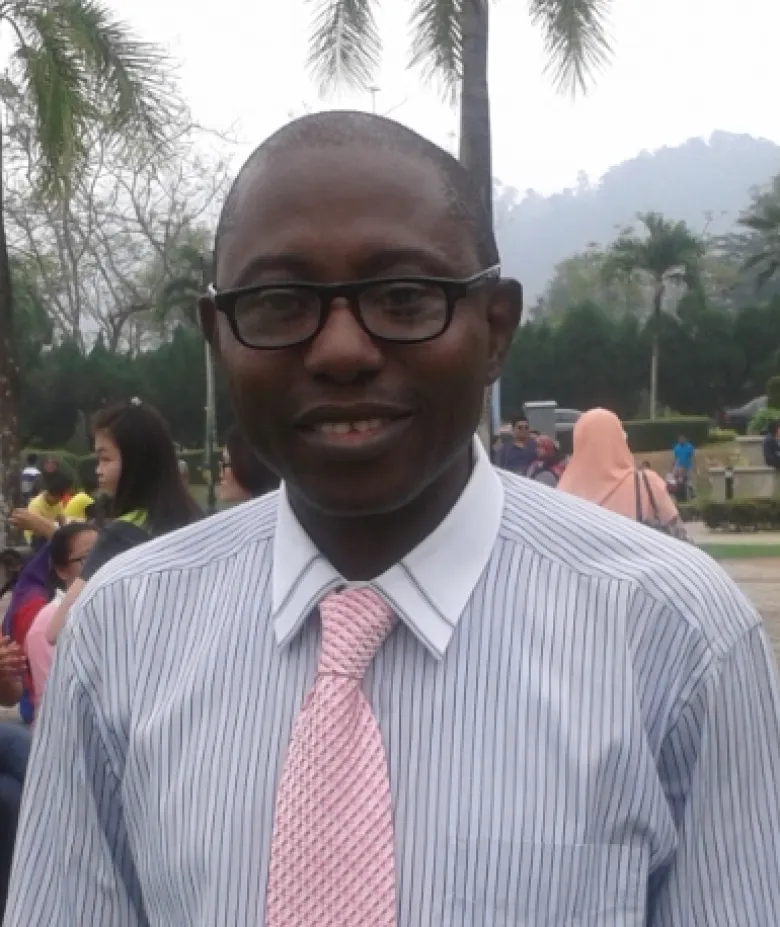
Former Minister of Sports, Solomon Dalung, has accused President Bola Tinubu’s administration of lacking the political will to confront Nigeria’s deepening insecurity, alleging that the government is more adept at tracking critics than neutralising terrorists.
Speaking on Arise TV’s Morning Show, Dalung said the state deploys sophisticated surveillance tools against dissenting voices while failing to use similar capabilities against armed groups responsible for mass abductions and killings.
Government seems not to have the political will to deal with it. They have all the gadgets to track anybody who criticises the government — they can pick him up in the next five minutes. But they don’t have equipment to track terrorists who display huge phones in the forest, behead teachers, abduct schoolchildren, torture them, produce videos and send, he said.
Dalung argued that the federal government’s appeal for unity against terrorism was less a rallying cry and more an admission of failure. In his view, Abuja has run out of ideas and is unable to stem violence that has spread from the North-East to virtually every region.
He described Nigeria’s security architecture as fragmented, with agencies working in isolation rather than sharing intelligence and operating under a coherent strategy. This vacuum, he warned, has enabled insurgents, bandits and kidnappers to entrench what he called a parallel forest economy, sustaining themselves through ransom payments, illegal taxation and control of ungoverned spaces.
Dalung also questioned the impact of foreign military partners, particularly the United States, saying Nigerians had yet to see tangible results from their presence. Instead of repeated assurances, he urged the government to empower local communities and vigilante structures to defend themselves where the state has failed to provide security.
Turning to politics, the former minister said the country was drifting back to First Republic-style regional alignments, with powerful blocs coalescing around different presidential hopefuls. With almost every geopolitical zone nurturing its own candidate, he warned that the 2027 elections could be marked by intense rivalry and confusion.
Dalung further rated Tinubu’s performance as disappointing, accusing the administration of relying on rhetoric about reforms while ordinary Nigerians sink deeper into poverty. According to him, the economy is in the doldrums, insecurity remains largely rhetorical, and the promised benefits of reforms have yet to reach the streets.
However, political scientist Obafemi George, who appeared on the same programme, defended the government, insisting that the scale of insecurity inherited by the current administration is unprecedented and that more resources have been committed to tackling it.
George cited recent rescue operations in Borno and Katsina as evidence of progress and pointed to an improved sovereign credit rating by Standard & Poor’s as a sign of economic stabilisation. He argued that structural reforms inevitably cause short-term pain and that no country has transformed from poor to prosperous in a few years.
Referencing examples such as China, Rwanda and Dubai, George maintained that Nigeria’s current hardship is partly the result of delayed reforms, including the long-postponed removal of fuel subsidy. He urged citizens to allow time for the administration’s policies to yield results, insisting that key performance indicators show the president is on the right track.