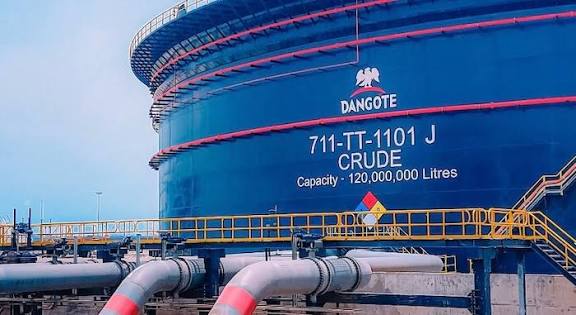
Dangote Petroleum Refinery has pledged to put Nigeria’s fuel needs ahead of export opportunities as global oil markets reel from renewed tensions in the Middle East and a sharp rise in crude prices.
Speaking at a briefing in Lagos, managing director David Bird said the 650,000-barrel-per-day plant would prioritise supplies to the domestic market in a bid to curb shortages and cushion Nigerians from the worst of the price shock rippling through international energy markets.
He insisted, however, that the commitment depends on steady access to local crude oil at market-linked prices and on clear backing from the federal government and the state-owned Nigerian National Petroleum Company.
Bird warned that the refinery, a private venture owned by industrialist Aliko Dangote, cannot guarantee that pump prices will not rise further, stressing that the company is fully exposed to swings in global commodity prices, freight rates and insurance costs.
International crude benchmarks have surged above 100 dollars a barrel amid fears of supply disruptions, sending stock markets lower and fuelling anxiety over energy security worldwide. In Nigeria, retail petrol prices have jumped by about 20 percent in a week, with motorists in Lagos now paying around 1,050 naira per litre, up from 830 naira.
The spike marks a dramatic escalation for a country where petrol sold for 195 naira a litre at the start of 2023, before President Bola Tinubu scrapped long-standing fuel subsidies as part of a broader economic reform drive. The removal of subsidies exposed consumers to global price movements but was hailed by investors as a step toward cleaning up public finances.
Before the Dangote refinery began operations, Africa’s largest oil producer relied heavily on imported fuel despite its crude wealth, a paradox that left the country vulnerable to recurring shortages and foreign exchange pressures.
Bird argued that if the government wants to shield citizens from further price shocks, it must decide how far it is prepared to intervene in the energy market, whether through targeted support, regulatory measures or strategic crude allocations.
Nigeria, he said, can count on supply security from the new mega-refinery, but price stability will ultimately depend on policy choices made in Abuja as much as on events in the Middle East and the wider oil market.