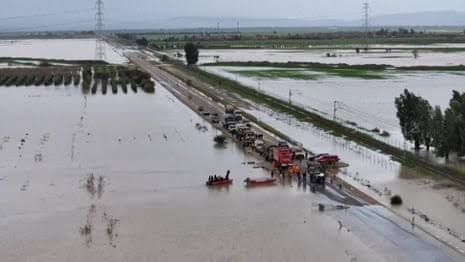
Moroccan security forces and emergency crews are evacuating tens of thousands of residents from flooded towns and villages in the country’s north after several days of heavy rainfall. Streets have become impassable in multiple locations, and some neighbourhoods have been cut off due to high water levels.
According to the interior ministry, more than 50,000 people have been relocated, with the majority coming from Larache province. The city of Ksar El Kebir, approximately 100 kilometres south of Tangier, is among the most affected areas, where low-lying districts have experienced significant flooding of homes, commercial premises and agricultural land.
Displaced residents are being accommodated in a combination of private and public settings. Some families have moved in with relatives in less affected zones, while others have been transferred to schools, sports halls and public buildings that have been repurposed as temporary shelters. Local authorities indicate that security forces, civil protection units and volunteers are operating continuously to reach isolated residents, using inflatable boats and heavy vehicles to traverse flooded roads.
Morocco’s national weather service has issued warnings of continued atmospheric instability, including heavy rain, strong winds and snowfall above 1,500 metres in several provinces. Given the already saturated soil and elevated river levels, officials assess a heightened risk of further flooding, particularly in rural areas where drainage capacity and infrastructure are limited.
Following royal instructions, the Moroccan army has been deployed to support relief operations. Military engineers are engaged in securing key transport routes, restoring communications and delivering food, blankets and medical supplies to communities that have become isolated. Helicopters are on standby for medical evacuations and for accessing locations cut off by rising waters or landslides.
The current situation has renewed attention to previous flood events, including sudden floods in the coastal city of Safi, where dozens of fatalities were recorded and which authorities classified as one of the country’s most severe recent weather-related disasters. In response, urban planners and environmental groups are reiterating calls for enhanced flood defences, more rigorous land-use planning and improved early-warning systems, with a focus on rapidly growing urban areas and vulnerable river basins.
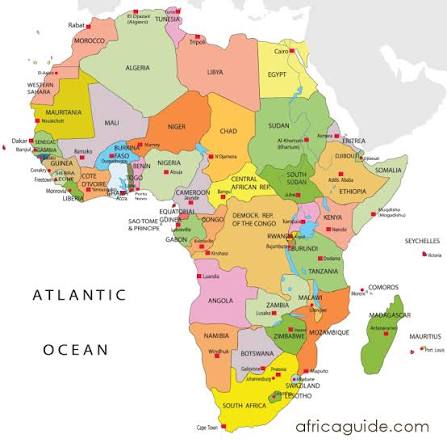
The storms affecting northern Morocco are occurring in parallel with other extreme weather incidents in North Africa. In Algeria, recent floods have resulted in at least two deaths, including a child, while Tunisia has reported multiple fatalities and missing persons following its heaviest rainfall in decades.
Moroccan authorities are advising residents in high-risk zones to comply with evacuation directives and to avoid attempting to cross flooded roads. Officials identify the coming days as a critical period for limiting additional casualties and damage.