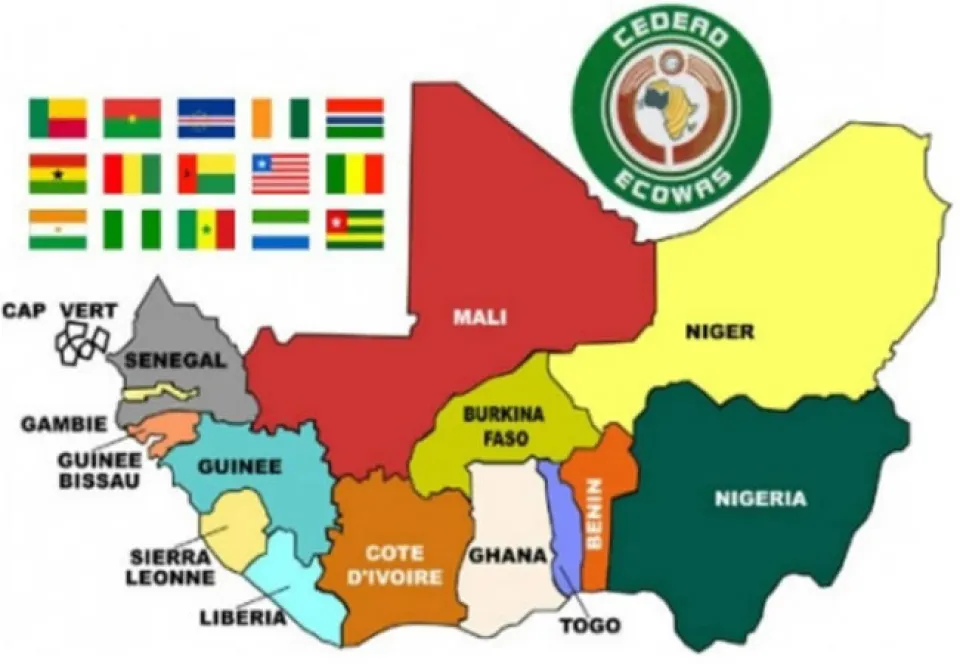
The West African bloc Ecowas has warned of potential disintegration and worsened insecurity following the formalization of a breakaway union by Burkina Faso, Mali, and Niger. Ecowas Commission President Omar Alieu Touray stated that this move significantly threatens the 50-year-old bloc, urging a reversal of the decision to avoid severe consequences.
The military leaders of these three countries declared on Saturday that they are "irrevocably" leaving the 15-member Ecowas to form their own confederation. These juntas came to power through coups between 2020 and 2023, prompting Ecowas to impose sanctions and demand a quick return to civilian rule. Though Ecowas initially threatened military intervention, it later opted for sanctions, some of which have been lifted as the bloc attempts to dissuade the juntas from leaving.
Touray emphasized that this latest move could disrupt regional freedom of movement and efforts to combat insecurity, particularly in intelligence sharing. Ecowas has appointed Senegalese President Bassirou Diomaye Faye to mediate the crisis, leveraging his generational alignment with the military rulers and his critical stance on Western influence, notably France, which formerly colonized all four countries.
The three nations have expelled French soldiers and sought military assistance from Russia instead. In a related move, Germany's defense ministry announced the end of its military operations in Niger by the end of next month, following failed negotiations with the ruling junta. This follows the US's withdrawal of troops from an air base in Niamey, leaving only one drone base operational in Agadez.
Nigeria's President Bola Tinubu, reappointed as Ecowas chairperson, highlighted the necessity for new partnerships to address the political, economic, and security challenges in West Africa and the Sahel region.
On Saturday, Burkina Faso, Mali, and Niger signed a treaty to establish the Alliance of Sahel States, agreeing to build common institutions and infrastructure to facilitate free movement within their countries. This development could lead to the loss of the right for Ecowas citizens to live and work across all member countries unless a new agreement is reached.
West African leaders are concerned about the potential spread of jihadist groups through the Sahel into neighboring countries, exacerbating regional insecurity. The junta-led states, hardest hit by Islamist insurgencies, justified their power seizures on these grounds.
Adama Gaye, a former Ecowas director of communications, described the junta's confederation as a “very big blow” to Ecowas, noting that the three countries are founding members of the bloc, established in 1975. He also criticized Ecowas for pushing military-led countries toward democratic elections while many member states are not “true democracies” themselves. Gaye warned that Ecowas risks becoming an “institutional laughing-stock” if it fails to address its own democratic shortcomings.