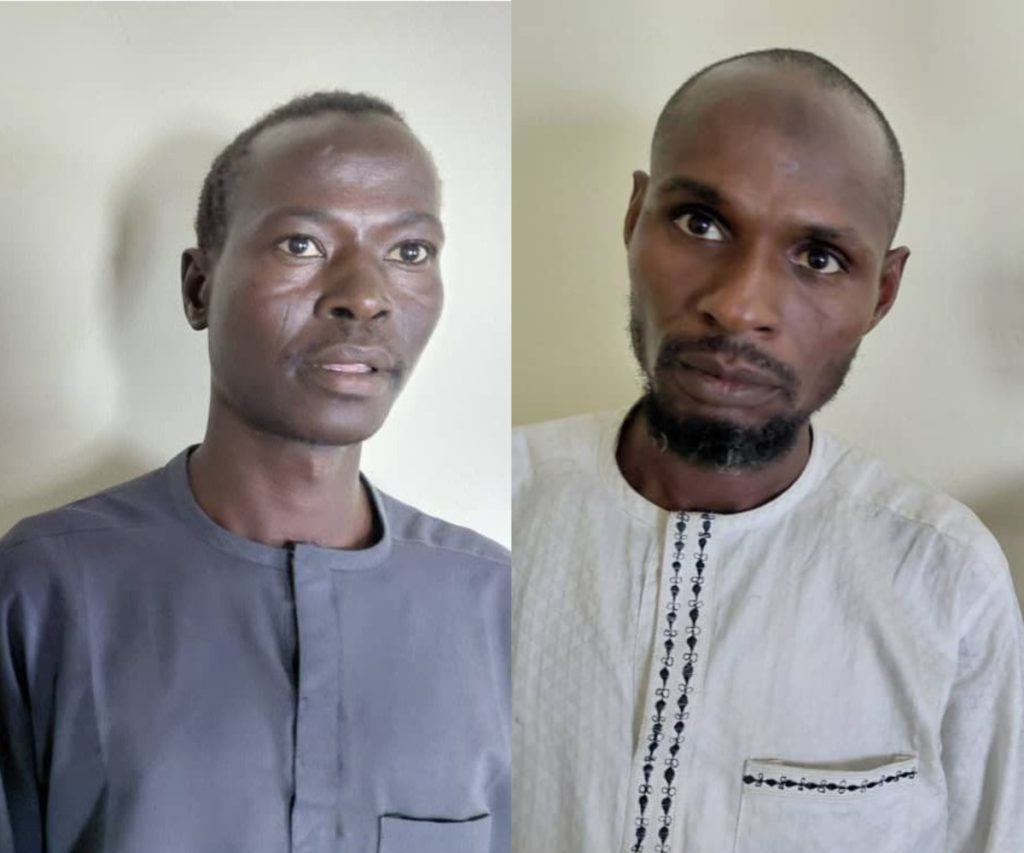
Two senior members of the Islamic State West Africa Province have surrendered to Nigerian troops in Yobe State, in what security sources describe as a significant breakthrough in ongoing counterinsurgency operations in the North-East.
The men, identified as Ismail Mohammed and Abu Umar, turned themselves in to soldiers of the 159 Battalion in Geidam, Yobe State. Both are believed to have held influential positions within ISWAP’s command structure, with Abu Umar reportedly serving as a key bomb-making engineer and specialist in Vehicle-Borne Improvised Explosive Devices, or car bombs.
Security analyst Zagazola Makama and military sources familiar with the development say Abu Umar’s surrender could provide critical insight into ISWAP’s bomb-making infrastructure, logistics chains and operational planning. Bomb specialists occupy some of the most sensitive roles in terrorist organisations, often holding detailed knowledge of bomb factories, storage sites, training camps and the routes used to move explosives and components across the region.
According to the sources, Abu Umar is believed to have been involved in the design and deployment of sophisticated explosive devices used in high-profile attacks on military bases, civilian gatherings and strategic infrastructure. His expertise in constructing car bombs made him a valuable asset to ISWAP’s campaign of violence in the Lake Chad basin and across the North-East.
The second surrendering insurgent, Ismail Mohammed, is reported to be a commander linked to the Baa Shuwa axis in the Timbuktu Triangle, a notorious insurgent stronghold spanning parts of Borno and Yobe states. The area has long served as a staging ground, training hub and logistics corridor for both Boko Haram and ISWAP factions.
Security officials say the surrender of figures at this level suggests growing pressure on insurgent networks from sustained military operations, airstrikes and intelligence-led raids. It may also reflect internal strains within ISWAP, including leadership disputes, resource shortages and declining morale among fighters.
Vehicle-Borne Improvised Explosive Devices have been among the deadliest tools in the insurgents’ arsenal, used to strike crowded markets, places of worship, checkpoints and military formations. Such attacks have caused mass casualties, destroyed infrastructure and spread fear across communities in the North-East.
Investigators are now debriefing the two men, with security agencies hoping that information they provide will help dismantle bomb-making cells, disrupt planned attacks and further degrade ISWAP’s capacity to wage war against both military and civilian targets.