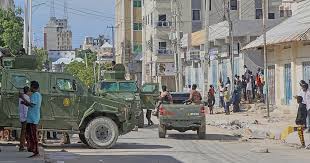
Gunfire and explosions echoed across Mogadishu as Somali government forces and opposition-aligned fighters clashed in several neighbourhoods, deepening a political crisis that has unsettled the capital.
Former president Sharif Sheikh Ahmed, a key opposition figure, accused President Hassan Sheikh Mohamud’s administration of using security forces to intimidate rivals after what he described as a direct attack on his residence. Ahmed, who led Somalia from 2009 to 2012, said the confrontation was part of a broader effort to silence dissent over the government’s handling of elections and constitutional changes.
“The president’s term in office has expired, and we have committed no wrongdoing. Why then are you trying to intimidate us and attack us?” Ahmed said, alleging that the government was “illegally altering the constitution” to extend its stay in power.
The clashes erupted ahead of an opposition-led rally planned to denounce Mohamud’s decision to prolong his mandate by a year and delay elections. Opposition leaders say the move violates the constitution and undermines already fragile trust in federal institutions.
Residents described hours of fear as streets emptied and movement was restricted. “Movement of both transport and people were restricted. This instilled us with fear, so I hope things will change and become normal,” said Abdullahi Nur, a university student in Mogadishu.
Security officials rejected accusations of political repression, insisting that government forces had responded to “organized attacks” by armed militias aligned with political actors. Mogadishu police said state forces repelled assaults on their positions and launched investigations into those suspected of organizing, funding and directing the violence.
Opposition figures countered that security units targeted homes linked to Ahmed and former prime minister Hassan Ali Khaire, framing the operation as a deliberate attempt to break up peaceful mobilization against the term extension.
The confrontation has drawn concern from international partners and the United Nations, which have urged restraint and dialogue. The standoff comes as Somalia attempts a fraught transition from a clan-based power-sharing model, in which elders select lawmakers who then choose the president, toward more direct and competitive elections.
The turmoil unfolds against a backdrop of persistent insecurity. Somalia continues to battle the al-Shabaab insurgency while trying to rebuild state institutions after decades of conflict and the collapse of central authority following the fall of Mohamed Siad Barre in 1991.