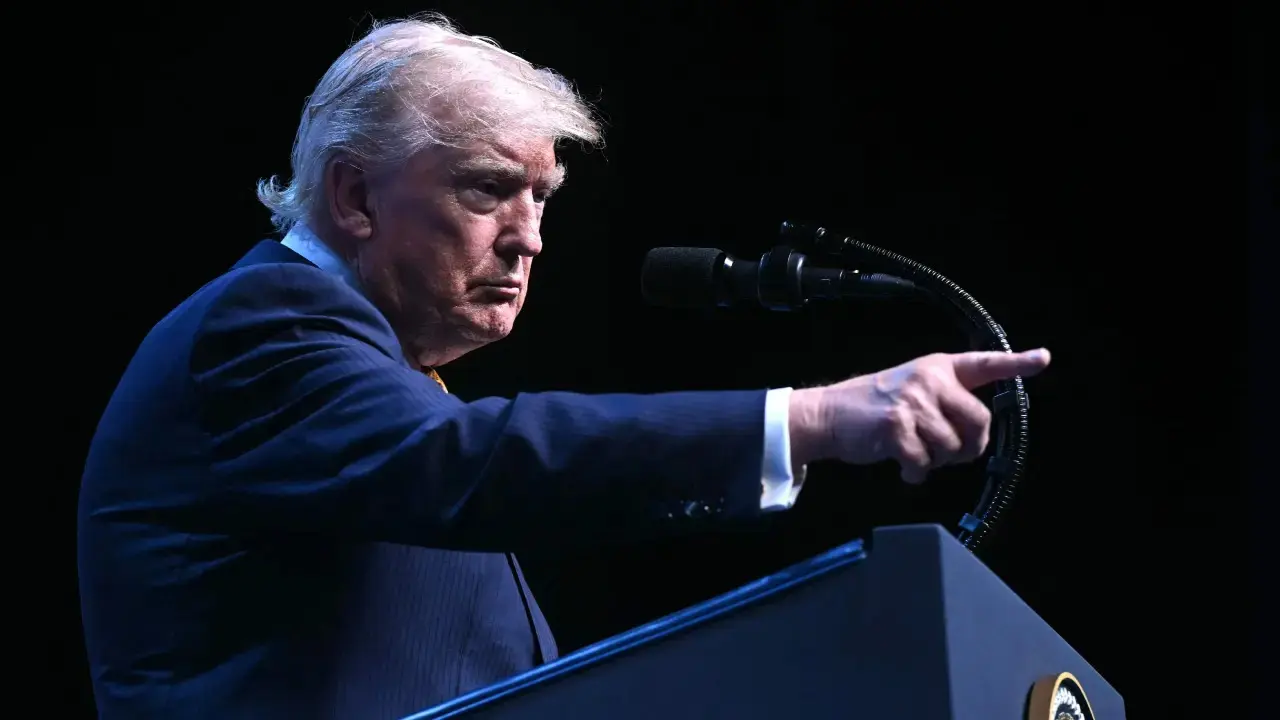
US President Donald Trump has said negotiations with Iran remain limited, while indicating that he would rather increase economic pressure on Tehran than immediately launch another military operation.
Speaking briefly by phone, Trump described the situation as being handled "low key" and said Iran's economy was already in serious difficulty.
Meanwhile, Iran, Oman and the United States have been working on an arrangement concerning maritime traffic through the Strait of Hormuz. Iranian Foreign Minister Seyed Abbas Araghchi said Tehran and Muscat were close to reaching an agreement on a temporary route for ships passing through the strategic waterway.
However, Araghchi maintained that Iran would not resume negotiations with the United States unless Washington stops what Tehran considers a violation of a recently signed memorandum of understanding. He stressed that, contrary to Trump's comments, there are currently no direct negotiations taking place between Iran and the US.
Trump has previously threatened severe consequences if the Strait of Hormuz is not reopened soon. At one point, he claimed that Washington was engaged in productive discussions with Tehran, although Iranian officials denied that talks were taking place.
The US president had also issued a stark warning, describing his message to Iran as a "last chance before decapitation" and demanding that the Strait be reopened quickly. He argued that the issue was straightforward and that Iran would have to act soon.
The conflicting statements from Washington and Tehran have increased uncertainty surrounding the Strait of Hormuz, a critical global shipping route through which roughly 20 per cent of the world's fossil fuels pass. Any prolonged disruption could have significant consequences for international energy supplies and prices.