Activewear giant Lululemon has joined a $30 million Series A funding round for Syntetica, a French startup aiming to crack one of fashion’s toughest waste problems: how to recycle nylon at scale without sacrificing performance or cost.
Nylon is prized in sportswear for its strength, stretch and durability, but it is notoriously difficult to recycle, especially once blended and mixed in post-consumer textile waste. Syntetica says its process can handle both Nylon 6 and Nylon 6,6, two widely used but hard-to-separate variants that typically end up in landfills or incinerators.
Chief executive Marco Bertone describes Syntetica’s strategy as unapologetically pragmatic. The company is betting that brands will only switch to recycled nylon if it is price-competitive and available at industrial scale. Rather than selling finished fabrics, Syntetica will supply recycled nylon pellets that existing manufacturers can spin into yarn, slotting into the current supply chain instead of trying to replace it.
That approach has already attracted heavyweight partners. Alongside Lululemon, lingerie and apparel groups Victoria’s Secret and Etam are working with Syntetica on a recycling project expected to reach the market soon. MAS Holdings, one of the world’s largest apparel manufacturers, also joined the Series A, a rare move for a supply chain player backing a still-scaling recycler.
Syntetica is building its first commercial demonstration facility in Clermont-Ferrand, in partnership with Michelin’s Center for Sustainable Materials. The plant is designed to prove that the technology can move beyond the lab and produce hundreds of tons of recycled pellets per year, a critical step before rolling out additional sites near textile waste streams and manufacturing hubs worldwide.
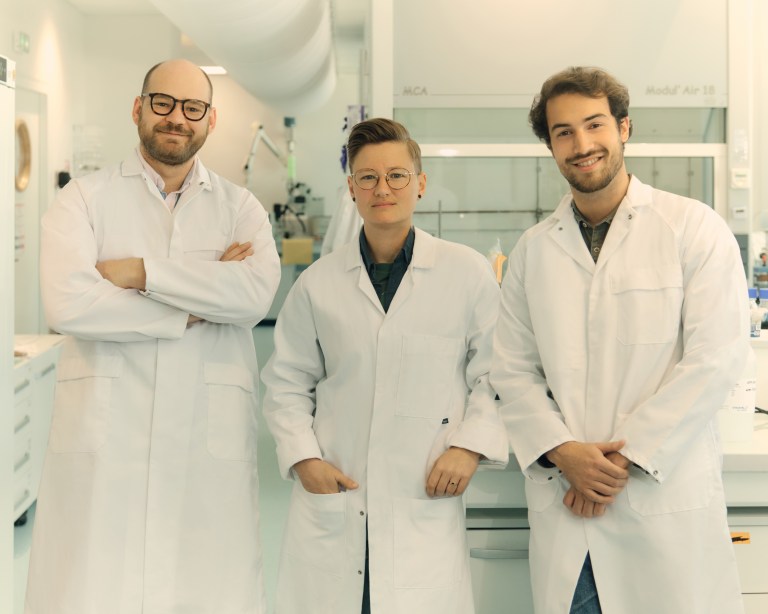
The startup’s origins lie in a match between business and science. Bertone, who previously worked in fashion and secondhand e-commerce, teamed up with chemistry researcher Louis Monsigny through the Entrepreneurs First accelerator in Paris. They later added CTO Ash Ward, whose experience in large-scale industrial projects is intended to help Syntetica navigate the risks of scaling a new materials process.
Public and private investors see more than a niche sustainability play. Backers include France’s Bpifrance through its Ecotechnologies 2 fund, the European Innovation Council, and venture firms such as EQT Ventures and SWEN Capital Partners. For them, Syntetica sits at the intersection of industrial policy, climate goals and the fashion industry’s scramble to secure more resilient, lower-carbon raw materials.

.webp?alt=media&token=e3a9e4bd-46a0-437f-996c-584f124fe958)