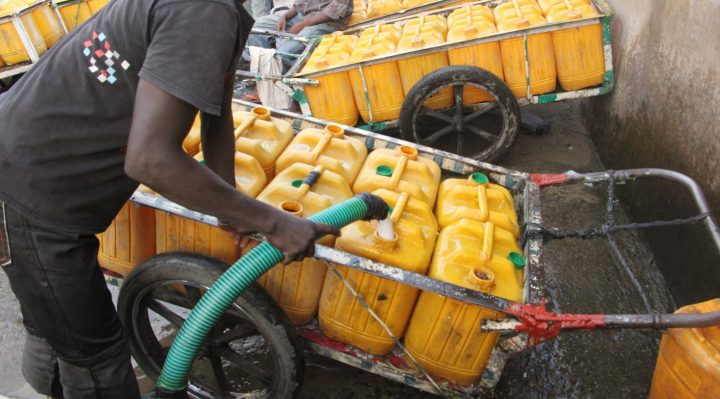
Water scarcity is wreaking havoc in Lagos State, with residents in Ikorodu and Alapere suffering from a dire lack of reliable water supply. As communities grapple with inconsistent access and poor water quality, many are forced to shell out big bucks for private water sources just to quench their basic needs.
Shocking research reveals that power outages directly hinder water access in these neighborhoods. Despite countless promises and substantial investments from the Lagos State Government aimed at fixing the potable water crisis, the situation remains bleak, leaving residents frustrated and desperate for action!
Community voices are rising in unison, demanding immediate government intervention for a dependable public water supply. Mr. John Taiwo, a cinematographer in Ikorodu, voices a sentiment echoed by many: “The only threat to my water supply is when the electricity distributing company doesn’t bring light and my tank finishes.” This highlights the absurd dependency on electric pumping for basic household needs and the necessity of treating water,even for bathing,due to quality concerns.
In the chaotic Ikorodu market, Iya Ibeji, a market woman, reveals her struggle against the water crisis. She pays for water just to grind pepper and wash, but frequent shortages during power cuts or dry spells make her situation grim. “I don’t treat the water I use for washing, but I buy sachet water for drinking,” she confessed, a testament to the overwhelming reliance on purchased water for safety.
Some residents have found their own solutions to the crisis. Mr. Idris Ayeni installed a borehole in his home after his well dried up during the dry season. “Making a borehole has been the best decision I made for my water supply,” he asserts, claiming it has saved him money and provided cleaner drinking water. But how many can afford such an option?
Meanwhile, Alapere residents face even graver challenges, with many claiming their water quality is downright appalling. Mrs. Olaoti Omowunmi, a banker, describes her compound's water as “very bad,” only usable for toilet purposes. “I buy 10 gallons of 25-litre water from a community borehole for ₦2,500, and it lasts for three to four days,” she laments. Like many others, she treats her bathing water but resorts to sachet water for drinking,an added expense that shouldn't be necessary!
Mr. Femi Ogungbe, a businessman in Alapere, voices a similar frustration, emphasizing that poor water quality drives him to purchase alternatives. “The water is often mixed with soil, making purchased water a safer option for household use,” he states, underscoring the crisis many are facing daily.
Despite the overwhelming problems, there are rare glimmers of hope. Some residents, like Mrs. Janet Adeola, claim their borehole water is clean and reliable, although she admits to never having tested it. In Alapere market, a trader mentions buying two 25-litre kegs of water daily for ₦250 each,an expense that piles up quickly, all for basic business needs.
In summary, it’s clear that water scarcity is an ongoing disaster in both Ikorodu and Alapere, exacerbated by power outages and dwindling wells. While a few households have managed to secure borehole water, a vast majority still depend on costly purchased options, with sachet water being the go-to choice for drinking. Will the Lagos State Government finally step up and address this escalating crisis? Time will tell, but for now, the residents are left in a desperate fight for one of life’s most essential resources!