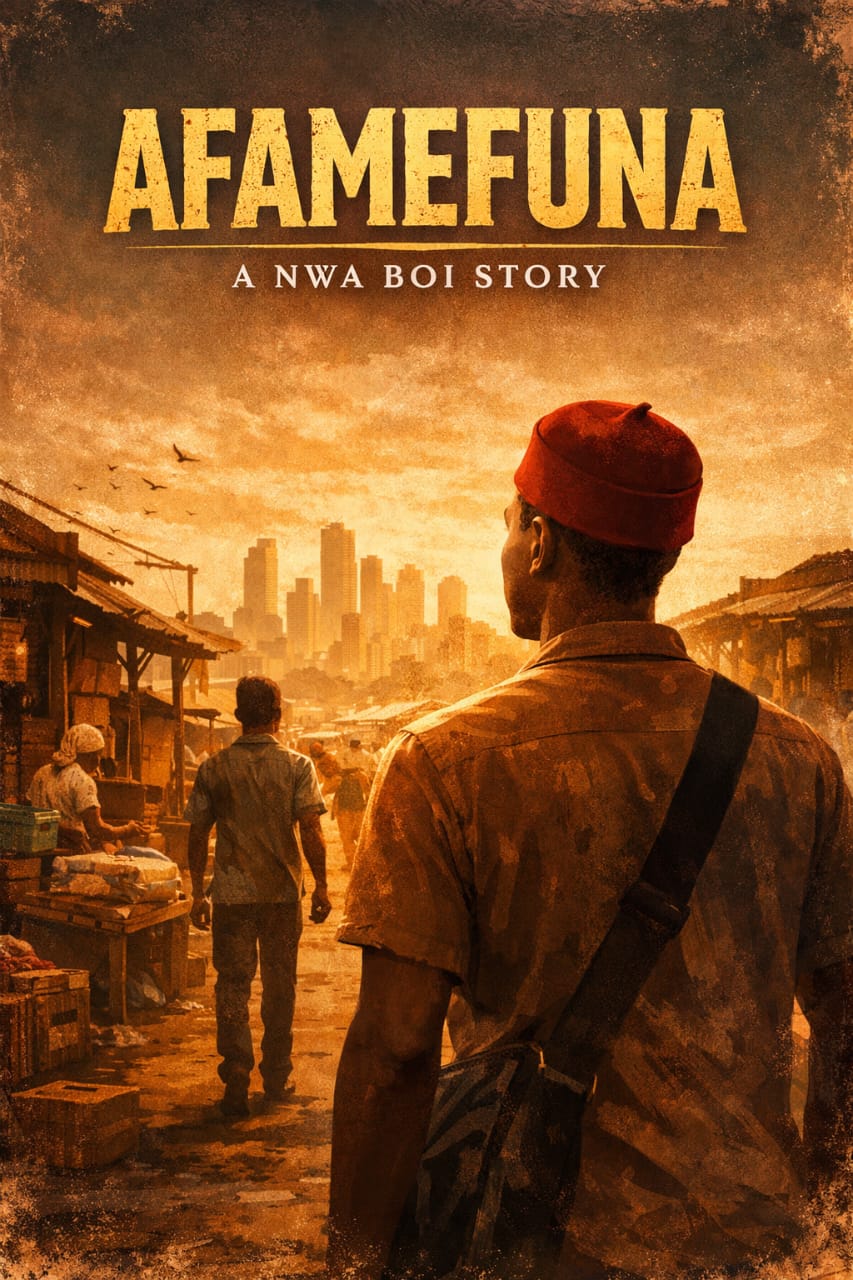
Afamefuna: A Nwa Boi Story is one of those movies that stays with you long after the credits roll — not because of flashy action, but because it captures something deeply human: how culture shapes us, how friendship can lift or destroy us, and how traditions influence our success or downfall.
The story begins with Afamefuna, now a successful businessman, being pulled into a police investigation over the death of his friend Paul. This isn’t just any investigation — it forces him to confront memories from his past, showing us the real story of who he became and why. What follows isn’t a typical whodunit; it’s a reflective journey into the Igbo apprenticeship system, the backbone of the narrative.
Years earlier, young Afamefuna leaves his hometown to serve as a “Nwa Boi” under Odogwu, a seasoned businessman. Odogwu is a mentor who doesn’t just teach business, but life. From him, Afamefuna learns discipline, respect, loyalty, patience, and how to navigate people and trade.
Afamefuna’s name — meaning “my name won’t be lost” — reflects his journey. The apprenticeship system isn’t just business training; it’s a cultural rite of passage where boys leave home as sons and return as men, molded by strict but caring mentors.
Afamefuna befriends Paul, another apprentice. They hustle, dream, and climb the ladder of success together. But when Afamefuna gains favor and earns freedom before Paul, jealousy creeps in. Paul’s pride and disappointment push him into bad choices, toxic partnerships, and debt, showing how rivalry and envy can twist human emotion. The film treats this realistically — Paul isn’t evil, just flawed, making the story relatable.
Amaka, Odogwu’s daughter, adds another layer. She isn’t just a love interest; she symbolizes aspiration and the world Afamefuna wants to build — a future where hard work is rewarded, and relationships shape his destiny.
The film flashes between past and present gracefully, letting viewers feel Afamefuna’s memories shaping his choices. Scenes with Odogwu, Paul, Amaka, and everyday shop life are stitched together with emotional depth.
What stands out is the celebration of Igbo culture. The apprenticeship system, or Nwa Boi tradition, is shown not as outdated, but as a real, functioning institution that teaches entrepreneurship, responsibility, and community interdependence — lessons formal schooling often misses.
A memorable scene is Odogwu giving Afamefuna a monologue about resilience, business, and life. It challenges viewers to stand disciplined and work hard, transforming Afamefuna into a man who knows why he does what he does.
The film doesn’t sugarcoat life. Paul’s tragic fall reminds us that talent alone isn’t enough; character, choices, and loyalty matter. Betrayal is shown subtly, hidden in resentment and regret rather than dramatic violence.
The story emphasizes identity and legacy. Success isn’t just measured in money, but in honoring the people and principles that shaped you. The past is never gone; it lives inside us, guiding or warning.
By the end, Afamefuna stands at a crossroads of accusation, loss, and reflection. The real story isn’t who killed Paul, but why history and culture shape every step we take. The lessons of loyalty, hard work, and resilience resonate far beyond the movie, making Afamefuna’s name unforgettable.
Afamefuna: A Nwa Boi Story is a celebration of perseverance, cultural heritage, and human ambition. It reminds us that hardship teaches lessons we carry forever, and the relationships we form define our lives. It’s a story of blood, sweat, dreams, and the unshakable power of identity.
7