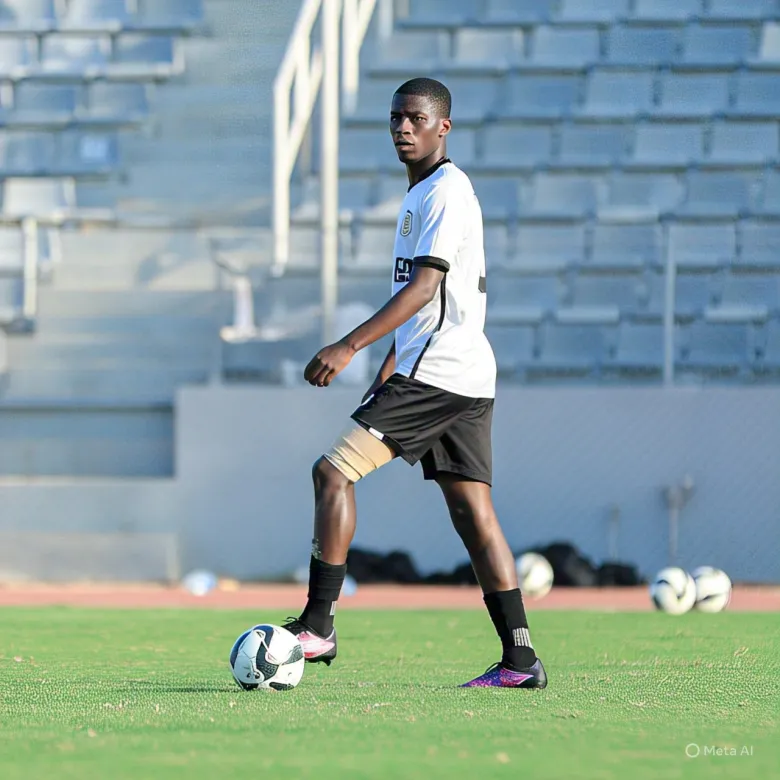
The bright lights overhead lit up the worn floor of the sports center, making it feel cold. I stood at the entrance of Pitch 4, leaning on my crutches, which creaked as I moved. The room was loud with laughter and smelled like sports cream. It was a lot different from my old club, where it was always quiet and strict. The walls here had old banners and jerseys, showing past wins and losses. I felt like an imposter—a broken player limping into a place where everyone else seemed whole.
It was during warm-up that I first noticed the difference. At my previous club, mistakes were met with barked orders and narrowed eyes. Here, when my pass wobbled off target, a wiry midfielder with a shock of blue hair grinned and tapped my shoulder. “Nice try, mate. We’ll get it next time.” The words were simple, but the tone—genuine, unhurried—landed with unexpected weight. Later, when I lagged behind in a drill, the coach jogged beside me, matching my awkward, uneven pace. “Take your time,” he said, voice low enough for only me to hear. “We play for each other, not for perfection.”
It wasn’t a grand gesture. No dramatic speech, no slow clap. Just a series of small, unforced acts: a shared water bottle, a joke about my clumsy crutch-work, a nod of understanding when I winced at a sudden twinge. Each one chipped away at the wall I’d built around myself.
As the weeks passed, I learned the rhythms of this new tribe. Here, belonging wasn’t measured by goals scored or sprints won, but by the willingness to listen, to adapt, to celebrate the small wins. The unspoken rule: everyone’s story mattered. You could see it in the way the team huddled before games, arms slung loosely over shoulders, the silence filled not with tension but with quiet solidarity. Injuries weren’t weaknesses—they were badges of effort, met with empathy instead of impatience.
I became attuned to the subtle cues: the way a teammate’s glance signaled a switch in formation, the shared laughter that followed a botched play, the gentle ribbing that welcomed newcomers into the fold. Even the air felt different—charged not with pressure, but with possibility.
One rainy Thursday, as we crowded under the leaking roof after practice, I realized I was laughing—really laughing—for the first time since my injury. My fracture had healed, but something deeper had mended too. In this unlikely patchwork of players, I had found a place where I didn’t have to hide my limp or my doubts. Belonging, I learned, wasn’t about fitting a mold. It was about being seen, flaws and all, and still being invited to play.
That moment—so ordinary, so profound—reshaped my understanding of what it means to belong. It isn’t about the club, the badge, or even the game. It’s about finding people who meet you where you are, who see your scars and still pass you the ball. Now, whenever I step onto a pitch, I carry that lesson with me: true belonging is not earned through perfection, but through shared humanity and the courage to show up, broken and hopeful, again and again.
This story reflects the transformative power of unexpected acceptance, highlighting how small gestures and an inclusive atmosphere can redefine belonging and self-worth. The character’s journey from isolation to connection is both original and deeply personal, aligning with the contest’s focus on impact, character development, and thematic resonance.