The internet has been in chaos lately with headlines screaming, hashtags flying, all because of one thing: Trump vs Tinubu.
Depending on where you get your news, you’ve either read that Trump “threatened Nigeria” or that Tinubu “clapped back at the U.S.”. But what if I told you most of what we’re reacting to isn’t even about the actual story, it’s about how it was framed? Welcome to the world of media framing, priming and agenda-setting the three silent forces shaping how we think, argue and tweet.
Agenda-Setting: What You See Is What They Choose
When a topic like “Trump comments on Nigeria” starts trending, it’s not by accident.
News platforms choose what stories dominate your feed, that’s agenda-setting. It doesn’t mean they tell you what to think but they decide what you should be thinking about. So even if Trump said ten different things in that speech, only the part about “Nigeria” gets pushed. Suddenly, every group chat, radio show and podcast is asking: “Did you see what Trump said about Nigeria?” That is the agenda doing its work.
Framing: The Power of Headlines
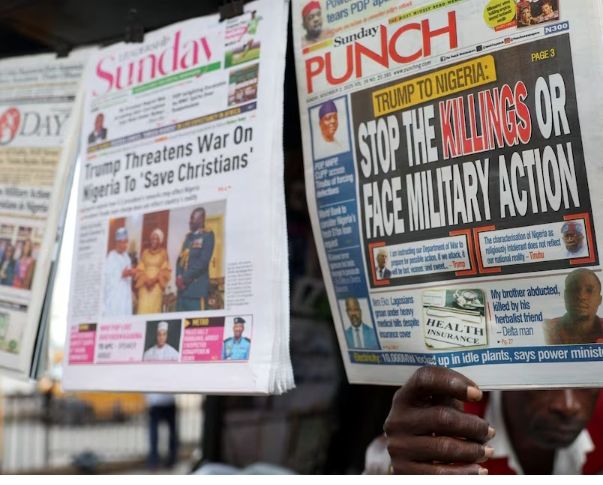
Now, notice how headlines vary. One says, “Trump threatens Nigeria over Christian persecution”. Another says, “Trump allegedly comments on Nigeria, Tinubu responds calmly”. Same topic. Different frames.
The first headline paints tension and fear. The second softens it. That’s media framing:the angle, tone or emphasis that shapes how you interpret a story. It’s why one story can make you angry and another makes you shrug even when both are about the same event.
Priming: The Aftertaste
Ever noticed how after seeing a type of news repeatedly, you start viewing everything through that same lens? That’s priming.
If every headline you read about Trump or Tinubu is conflict-heavy, your mind automatically expects tension even when there’s none. So next time a U.S. leader comments on Africa, you’re already mentally prepared for “disrespect” or “controversy” whether it exists or not. The media primes us, one story at a time.
So, What Really Happened?
Trump released a comment about terrorism in Nigeria, bold, vague and typically “Trump.” Some platforms presented it as a diplomatic threat, others as political banter. But the reaction came from how it was packaged.
Some Nigerians saw it as a foreign insult. Others saw it as proof of Nigeria’s growing global attention. Few stopped to verify what he actually said. Because in today’s media world, the headline often becomes the entire story.
What We Can Learn
This whole Trump–Tinubu drama isn’t just about politics; it’s a live lesson in media literacy. The next time a story goes viral, ask:
✨Who benefits from this narrative?
✨What’s being emphasised and what’s being left out?
✨Am I reacting to facts or to framing?
Because whether it’s about politics, celebrities or pop culture, the media does not just mirror reality. It shapes it.
The truth is, there’s no “neutral” media. Every story passes through choices: what to include, what to highlight, what tone to take. And that’s not always malicious; it’s just how storytelling works. But in a world of viral clips and instant outrage, understanding framing, priming and agenda-setting might just save us from becoming the news we consume.
If there’s one thing this week has shown, it’s this: Sometimes, it’s not the event itself that shakes the world, it’s the story told about it.
And the louder it gets, the less we remember to ask: what really happened?