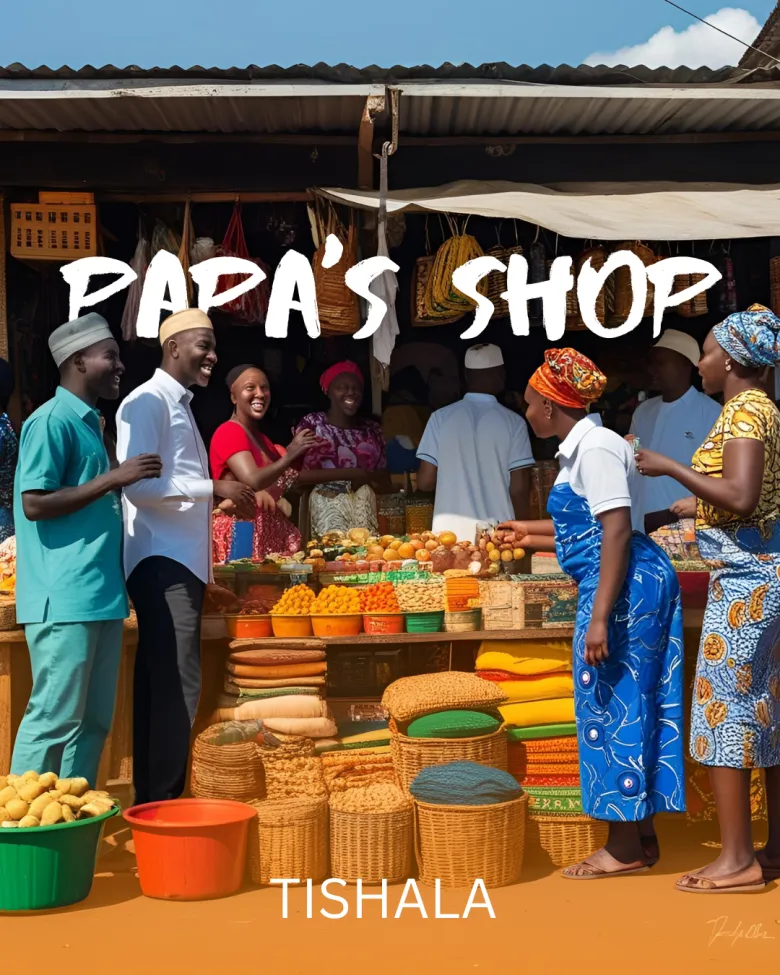
The wooden screen door creaked as she opened it stepping into the empty space. Dust floated in sunlit slants. The shop smelled of peppered spices, rotting wood, and time itself. Everything inside seemed to whisper—tales wrapped in vacant candy wrappers on the ground, empty sachets tucked behind shelves and between boards.
Chioma blinked, the years folding back. Her grandfather’s hands once danced across that very counter, wrapping different people’s purchases in black polythene. His voice, firm but kind, as he spoke.
“People don’t care if you’re having a good day or not. They just want to be happy. How do you think I make them happy, Chioma?”
He looked down at all two feet of me. I must have been five years old at the time . Small for my age, but I had a sharp mind.
“Biscuits?” I replied holding up the shiny wrapper containing my favorite crackers. My grandfather laughed, a hearty laugh that came from his soul.
“Yes. Exactly!”
For years, Okeke & Sons stood on the dusty roads of Karu. It outlived riots, protests, presidents, and ‘area boys’. Through coups and currency changes, it remained a faithful servant to the town’s stomach and spirit.
Years later, I once heard someone say that my grandfather, Okeke, knew your needs before you asked them. I smiled when I heard it because while the statement made him seem almost omniscient, the real reason was simple enough – he had enough loyal customers to know what they wanted out of habit alone. Aunties with aching backs leaned on the counters, chatting with him between purchase, always asking about “The wife and family”. Kids got sweets, even when their money fell a little short.
“Take it,” Papa Okeke would grin, sliding candy across the counter into their grubby hands. “Pay me with your smile.”
As time went on, people stopped calling it “Okeke Stores”, and they gave it a name that has stuck ever since – Papa’s Shop.
Now, the man himself was gone, laid to eternal rest.
Chioma’s father stuck a note on the door: “Closed for mourning” right next to a picture of a smiling Okeke. Yet, people came. Not for goods. For history. For the echo of laughter, the scent of ground crayfish, the feel of home.
They stood outside the locked door bearing many gifts—food, envelopes, stories.
“I met Ngozi right there,” a man said, pointing to the rice sack in the corner. “She had forgotten her change when she was gisting with Papa, I picked it and started looking for her. Five years later we were married.”
“Your grandpa once gave me food when my mama fell sick,”* whispered a woman tearfully in igbo. “We had nothing. He said: ‘No person should go hungry when there’s enough to share.’” She wiped a few tears pouring down her face.
One night, Chioma unlocked the door again. She swept the dust, mopped the cement floor, and chased away unwanted visitors from behind the shelves. Moments later, a hesitant knock announced the first visitor.
“Are you people open?” a small voice asked.
Chioma smiled, like her grandfather used to.
“We never really closed.”