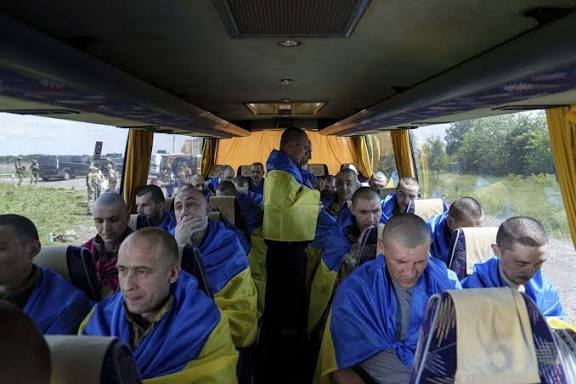
Russia and Ukraine have begun one of their largest prisoner exchanges in months, trading hundreds of captured soldiers even as efforts to revive meaningful peace talks remain frozen.
Officials from both sides confirmed that 200 Russian prisoners of war were released on Thursday under a deal brokered in Geneva, with Ukraine simultaneously securing the return of 200 Ukrainian fighters. The operation is part of a wider arrangement under which each country is expected to free a total of 500 prisoners of war, with the remaining captives due to be exchanged by Friday.
The agreement, reached during talks in Geneva involving Russian, Ukrainian and United States representatives, was hailed by mediators as a rare point of convergence in a conflict that has otherwise defied diplomatic resolution. For families on both sides, the exchanges offer a rare moment of relief in a war now in its fourth year.
Yet the limited success on humanitarian issues stands in stark contrast to the broader political deadlock. Negotiators say the core dispute over territory remains unresolved, with no sign of compromise. Kyiv has refused to cede any additional land in the eastern Donetsk region, including areas not currently under Russian control, despite mounting international pressure to consider territorial concessions as part of a wider settlement.
Ukrainian President Volodymyr Zelenskyy has repeatedly insisted that ending the war is his overriding priority, but only on terms that preserve Ukraine’s sovereignty and territorial integrity. He has pledged to keep pursuing diplomatic channels, while also arguing that any sustainable peace must be backed by security guarantees and continued Western support.
Strategic calculations on both sides are being reshaped by global energy markets. Soaring energy prices, driven in part by instability in the Middle East and the war in Iran, have boosted revenues from Russian oil and gas exports. Analysts warn that this windfall is helping Moscow finance its military campaign in Ukraine, potentially reducing incentives for the Kremlin to make concessions at the negotiating table.
For now, the prisoner exchanges underscore a paradox at the heart of the conflict: even bitter enemies can coordinate complex operations to bring soldiers home, yet remain unable to bridge the political gulf needed to stop creating new prisoners of war.