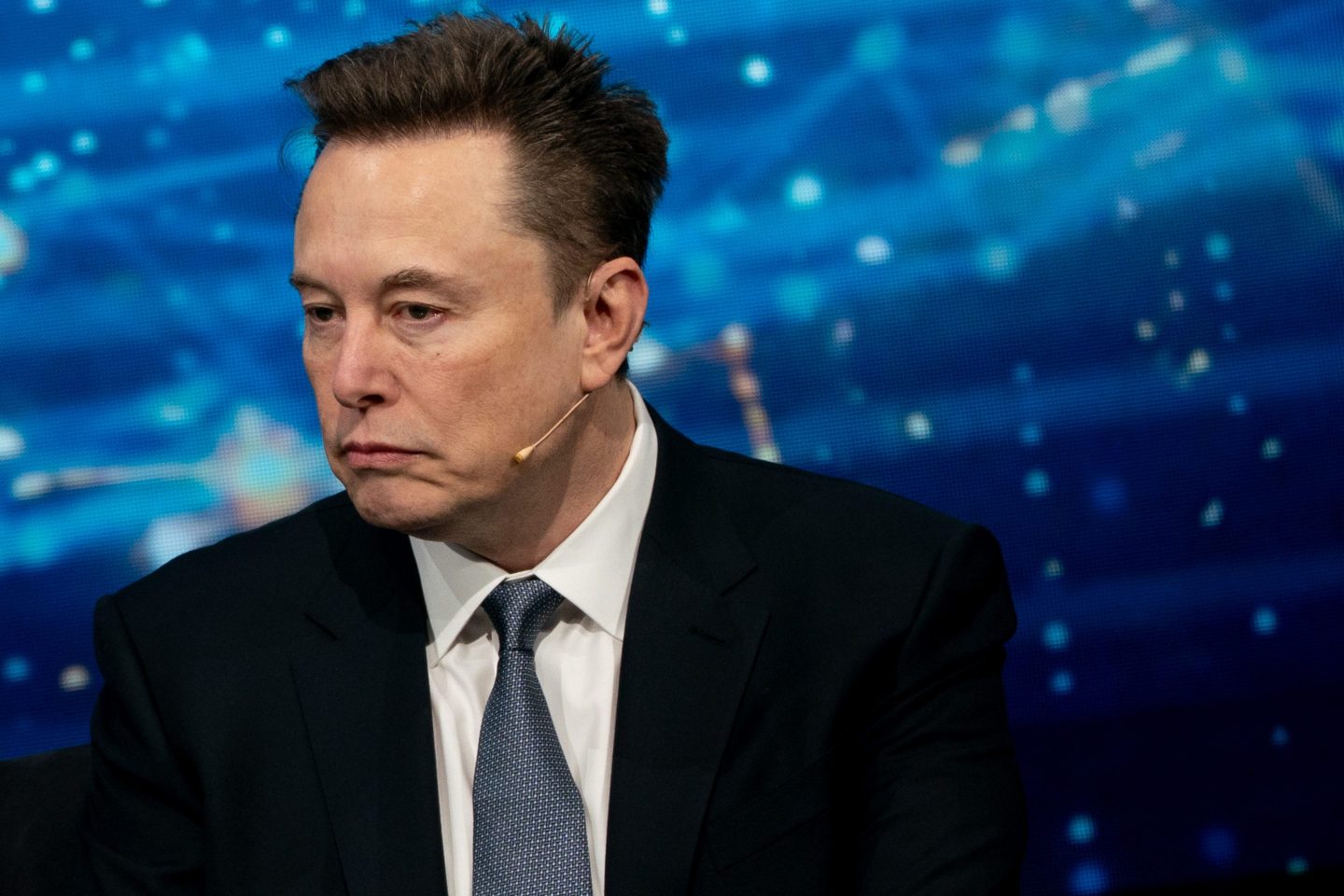
Elon Musk, the billionaire entrepreneur behind Tesla, SpaceX and X, is demanding between $79 billion and $134 billion in damages from OpenAI and its key partner Microsoft, escalating one of the most dramatic legal and philosophical battles in the artificial intelligence industry.
In court filings, Musk alleges that OpenAI and Microsoft amassed vast “wrongful gains” by leveraging his early role in founding and funding OpenAI in 2015, then abandoning what he describes as the organization’s original nonprofit mission to develop artificial intelligence “for the benefit of humanity.” Instead, he argues, OpenAI has become the centerpiece of a tightly controlled, profit-driven ecosystem that now underpins Microsoft’s most important AI products.
Musk’s legal team says his early backing of OpenAI went far beyond writing checks. According to the filings, he contributed roughly $38 million in funding, helped recruit key researchers and executives, lent his personal credibility to the fledgling lab and opened doors to influential partners and donors. Those contributions, his lawyers argue, entitle him to a share of the enormous value OpenAI and Microsoft have since created.
The damages figure is based on an expert analysis by financial economist C. Paul Wazzan, who was retained as Musk’s expert witness. Wazzan’s report, summarized in the filings, starts from a notional valuation of OpenAI at around $500 billion, a figure that reflects the company’s central role in the current AI boom and the commercial success of its models, including the GPT series.
From that valuation, Wazzan calculates that Musk should receive between $65.5 billion and $109.43 billion in “wrongful gains” from OpenAI alone. He then extends the analysis to Microsoft, which has invested billions of dollars in OpenAI and integrated its models deeply into products such as the Azure cloud platform and the Copilot suite of AI assistants. On that front, Wazzan estimates that Microsoft should pay Musk an additional $13.3 billion to $25.06 billion, bringing the total claim to as much as $134 billion.
Musk’s lawyer, Steven Molo, frames the claim as analogous to the outsized returns that early backers of successful startups often receive. In the filings, Molo argues that just as a seed investor can see gains many times larger than the initial investment, Musk is now entitled to disgorgement of the “wrongful gains” OpenAI and Microsoft allegedly earned by departing from the founding vision he helped establish.
The lawsuit contends that OpenAI was originally conceived as a nonprofit research lab, open and independent, dedicated to ensuring that advanced AI would be developed safely and shared broadly. Musk says he agreed to support the project on that basis, and that the organization’s charter and public messaging reinforced that mission. Over time, however, OpenAI created a complex structure that includes a capped-profit subsidiary and exclusive commercial arrangements, most notably with Microsoft.
In Musk’s telling, this evolution represents a betrayal of the founding agreement and a pivot toward a closed, proprietary model of AI development. He argues that OpenAI’s most advanced systems are now effectively controlled by Microsoft, which has secured privileged access to the technology and integrated it into its own products, from developer tools to office software.
OpenAI has forcefully rejected Musk’s narrative. In public statements and internal documents released in response to his claims, the company has described the lawsuit as “frivolous” and “not serious,” characterizing it as part of a broader harassment campaign aimed at slowing OpenAI’s progress while Musk builds his rival AI venture, xAI. Executives at OpenAI have pointed to internal emails and discussions suggesting that Musk himself pushed for a for-profit structure at one stage, provided that he could retain significant control.
According to OpenAI, the shift to a hybrid nonprofit and capped-profit model was driven by the enormous costs of training and deploying cutting-edge AI systems, which require vast computing resources and specialized talent. The company argues that without a commercial arm and deep-pocketed partners like Microsoft, it would not have been able to compete with tech giants or scale its technology to millions of users.
Microsoft, for its part, has maintained that Musk has no contractual right to any share of its AI-related gains. The company portrays itself as a strategic investor and infrastructure provider that took substantial financial and technical risks to support OpenAI’s work. It insists that its agreements with OpenAI are lawful, negotiated at arm’s length and unrelated to any personal commitments Musk may have made nearly a decade ago.
Both OpenAI and Microsoft emphasize that Musk never formalized any entitlement to equity, profit participation or control in binding contracts. They argue that whatever informal understandings may have existed in the early days of OpenAI do not give him a legal claim to the value created since then.
The case is scheduled to go to trial in Oakland, California, where it is expected to draw intense scrutiny from the technology industry, investors, regulators and AI researchers. The proceedings will likely delve into the internal history of OpenAI’s founding, the evolution of its governance structure, its negotiations with Microsoft and the private communications among its early backers, including Musk.
Musk has publicly embraced the coming courtroom battle. In a post on X, the social platform he owns, he said he “can’t wait to start the trial” and predicted that the discovery process and witness testimony would “blow your mind.” His comments suggest that he intends not only to seek financial redress but also to put OpenAI’s internal decision-making and relationship with Microsoft under a spotlight.
Beyond the personal and financial stakes, the lawsuit highlights a deeper tension at the heart of the AI revolution: whether the most powerful general-purpose AI systems should be developed and controlled by a handful of private corporations or governed by more open, public-interest frameworks. Musk has long warned about the existential risks of advanced AI and has argued that its development should be transparent and broadly accountable. OpenAI, while still invoking a mission to benefit humanity, has increasingly guarded its most advanced models and research, citing safety, security and competitive concerns.
The outcome of the case could have far-reaching implications. A victory for Musk might embolden other early contributors to mission-driven tech organizations to seek compensation if those entities later pivot toward profit. It could also pressure AI labs to clarify and formalize their commitments to openness and public benefit. A win for OpenAI and Microsoft, on the other hand, would reinforce the current trajectory of AI commercialization and the legal robustness of hybrid nonprofit–for-profit structures.
Whatever the verdict, the dispute underscores how quickly AI has shifted from a speculative research field to one of the most valuable and contested arenas in global technology. At the center of that transformation stands Musk himself, currently the richest person in the world, with a fortune estimated in the hundreds of billions of dollars and a growing stake in shaping the future of artificial intelligence.
.jpeg?alt=media&token=96b327a5-8e62-4ed1-a078-308aff149ed1)