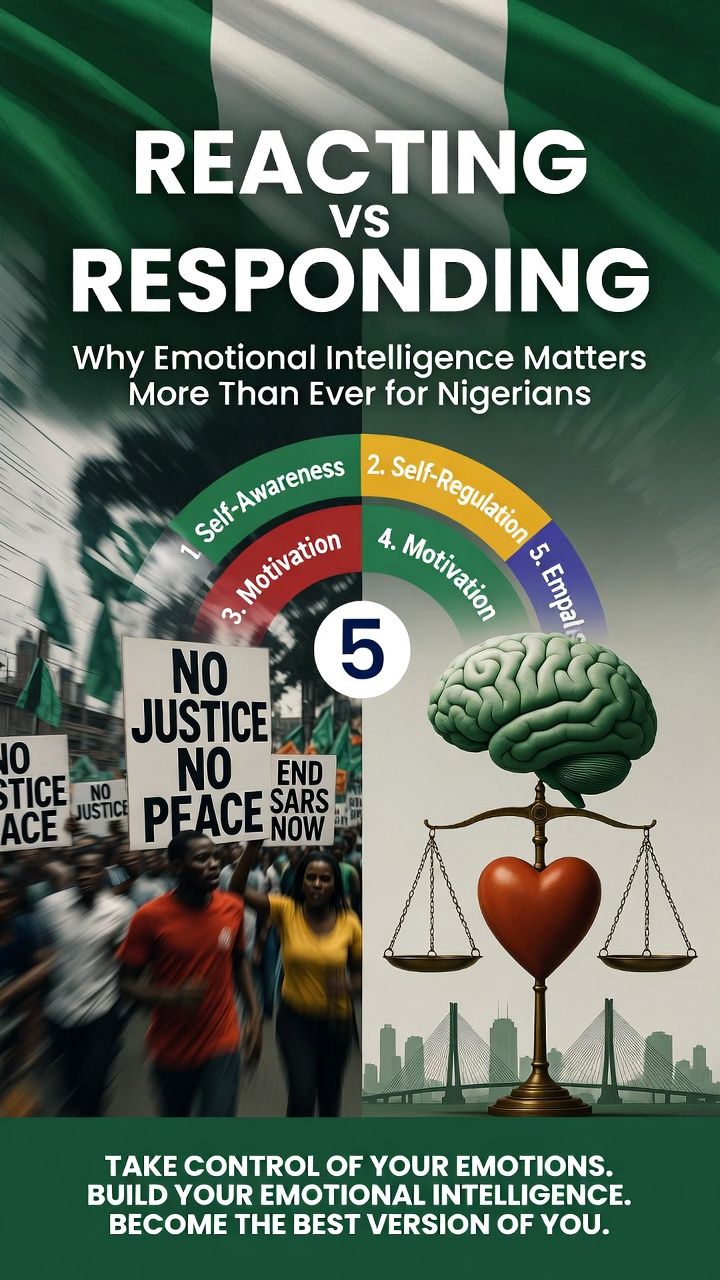
E.I
Nigerians often react to issues with intense emotion, quick responses, and collective expressions of frustration especially amid ongoing economic hardships, fuel price hikes, inflation, leadership decisions, and daily struggles in places like Lagos. From protests over soaring living costs, to heated online debates, market arguments, or public outbursts, reactions frequently involve anger, shouting, defensive arguments. While these show resilience and a demand for change, they also reveal patterns of reacting impulsively rather than responding thoughtfully.
Daniel Goleman's five components of Emotional Intelligence (EI) offer a powerful framework to understand and improve how Nigerians navigate these challenges:
1. Self-Awareness (Know Your Feelings)
Many Nigerians feel the pain deeply: hunger from food inflation, stress from traffic or queues, disappointment in governance. But without pausing to recognize "I'm angry because...", emotions escalate fast. High self-awareness helps identify triggers early, preventing reactions that fuel conflicts or online abuses.
2. Self-Regulation (Manage Your Emotions)
In high pressure situations like fuel scarcity,quick tempers can lead to violence, tear gas clashes, or damaged relationships. Self-regulation means breathing, choosing calm words over explosions, and de-escalating instead of inflaming. This turns raw frustration into constructive demands.
3. Motivation (Inner Drive)
Despite hardships, Nigerians show remarkable hustle and persistence (from street traders to entrepreneurs). But low motivation amid repeated setbacks leads to despair. EI-driven motivation keeps hope alive, focusing on long-term goals like personal growth or community upliftment, powered by resilience and faith.
4. Empathy (Understand Others' Feelings)
In a diverse society with ethnic, religious, and class divides, empathy is often missing in heated moments whether family disputes, workplace tensions, or political blame games. Feeling the other side's pain (e.g., a leader understanding citizens' hunger, or citizens seeing governance constraints) builds bridges instead of walls.
5. Social Skills (Build Relationships)
Strong community ties are a Nigerian strength, yet poor communication leads to misunderstandings, tribal clashes, or broken teams. EI enhances listening, clear dialogue, and conflict resolution turning protests into organized advocacy or arguments into solutions.
Why Nigerians especially need emotional intelligence today: Economic pressures create constant stress, leading to mental health strains. Leadership often reacts defensively rather than empathetically, worsening distrust. In workplaces, families, and online spaces, low EI fuels toxicity from cyberbullying to unproductive conflicts while high EI promotes harmony, better decisions, and collective progress.
Emotions are human, but wisdom channels them. Building EI isn't suppressing feelings it's mastering them for stronger individuals, families, communities, and a better Nigeria.
Start small... Pause before replying, listen before judging, stay motivated through faith.


