Violent anti-immigration protests have torn through parts of Belfast after a Sudanese refugee was charged over a stabbing that has reignited tensions around immigration and public safety across the United Kingdom.
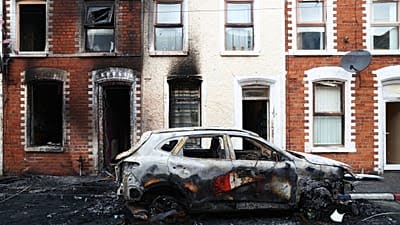
What began as a street demonstration quickly descended into running disorder. Masked crowds gathered in several districts, setting vehicles alight, erecting makeshift roadblocks and hurling missiles at police. Fire crews battled blazes at damaged buildings as residents were ordered to evacuate their homes amid fears the unrest would spread.
Police helicopters circled overhead while heavily equipped officers moved to disperse groups of protesters. Many city centre shops and local businesses shut early as rumours of further clashes circulated on social media, prompting warnings from authorities for people to avoid affected areas.
The violence followed the circulation of graphic footage showing a man repeatedly slashing another in the head and neck on a Belfast street before members of the public intervened and restrained the attacker. Police said the victim, a man in his 40s, sustained serious injuries to his eyes, face and back and remains in hospital.
A 30-year-old Sudanese refugee has been charged with attempted murder, possession of a bladed weapon in a public place and making threats to kill. The Home Office confirmed he arrived in the UK in 2023 and had been granted permission to remain until 2028. Police Chief Jon Boutcher said the suspect was not known to security services and did not appear on national security databases.
The revelation that the suspect was a recent refugee became a lightning rod for anti-immigration activists, who seized on the case to demand tougher border controls and greater scrutiny of asylum decisions. Online campaigners circulated the stabbing video despite appeals from authorities not to share it, using the footage to mobilise protests.
Witnesses described petrol bombs being thrown and families fleeing as flames spread close to residential streets. One local mother said the combination of the attack and the subsequent riots had left neighbours “terrified to step outside.”
Northern Ireland First Minister Michelle O’Neill condemned the unrest as “disgusting cowardice,” insisting that racism and intimidation “have no place in our society.” Prime Minister Keir Starmer called the stabbing “horrific” and joined Northern Ireland’s main party leaders in a joint appeal for calm, urging the public to allow the courts and investigators to do their work.