Nigeria’s Super Eagles have stormed back into the global spotlight, climbing an impressive 12 places to 26th in the latest FIFA World Ranking. It is one of the most significant upward moves by any national team in this cycle and a powerful statement about the team’s resurgence on both the African and world stage.
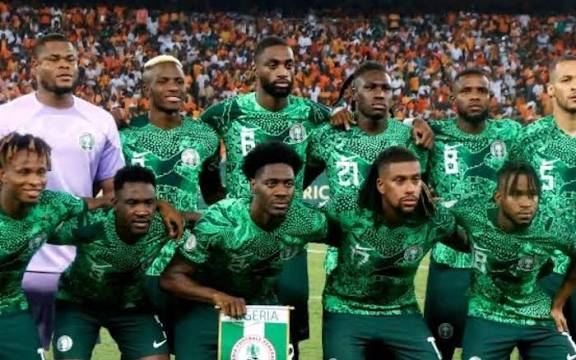
The leap from 38th to 26th is driven largely by Nigeria’s outstanding performance at the 2025 Africa Cup of Nations in Morocco, where the team finished third. Beyond the bronze medal, it was the manner of their performances that caught the eye: disciplined defending, fluid attacking play, and a renewed mental toughness that had often been questioned in previous tournaments.
Under head coach Eric Chelle, the Super Eagles won six of their seven matches at the tournament. Their only blemish came in the semi-finals, where they were narrowly eliminated by hosts Morocco on penalties after a tense, tactical battle. Rather than dwell on the disappointment, the team responded with conviction in the third-place playoff, defeating Egypt 4-2 in a thrilling contest that showcased both their attacking depth and their ability to respond under pressure.
That victory over Egypt was more than a consolation prize. It solidified Nigeria’s status as one of the continent’s most dangerous sides and delivered a crucial boost in ranking points. According to FIFA’s calculations, the Super Eagles recorded the highest points gain of any national team in the latest update, adding 79.09 points to their tally. In a ranking system where incremental changes are the norm, such a surge is rare and underlines the scale of their achievement.
The global hierarchy at the top of the FIFA ranking remains dominated by traditional heavyweights. Spain, Argentina, France, England, Brazil, Portugal, the Netherlands, Morocco, Belgium, and Germany occupy the top 10 positions, reflecting a familiar mix of European and South American powerhouses, with Morocco continuing to fly the flag for Africa after their historic World Cup exploits.
Yet Nigeria’s rise to 26th suggests that the gap between the established elite and ambitious challengers is narrowing. The Super Eagles now sit within striking distance of the world’s top 20, a zone that often correlates with seeded status in major tournament draws and a perception shift in how opponents prepare for them. For a team that has oscillated between promise and underachievement in recent years, this new ranking offers both validation and a challenge: to prove that this is not a one-off spike, but the beginning of a sustained climb.
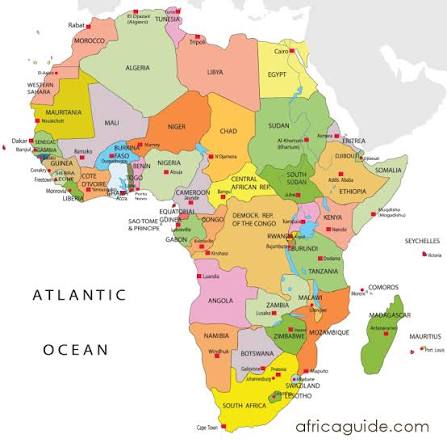
On the African continent, the latest ranking paints a picture of a fiercely competitive landscape. Morocco remain the top-ranked African side, followed by Senegal and then Nigeria, who now occupy third place on the continent. Behind them are Algeria, Egypt, Côte d’Ivoire, Cameroon, Tunisia, DR Congo, and Mali, rounding out a top 10 that underscores the depth of quality across African football.
For Nigeria, sitting third in Africa is both an achievement and a reminder of the work still to be done. Morocco’s consistency at major tournaments and Senegal’s recent continental success have set a high bar. Nigeria’s ambition, historically, has been to dominate African football, not merely to compete within it. The current ranking suggests they are back in that conversation, but not yet at the summit.
Coach Eric Chelle’s influence has been central to this turnaround. Known for his emphasis on structure without sacrificing attacking freedom, he has managed to blend Europe-based stars with emerging talents from the domestic league and diaspora. The result is a squad that looks more balanced than in previous cycles: a solid spine, greater tactical flexibility, and a bench capable of changing games.
The AFCON campaign in Morocco offered a snapshot of this evolution. Nigeria showed they could grind out results when necessary, but also overwhelm opponents with pace and creativity in the final third. The 4-2 win over Egypt in the third-place match was emblematic: a high-tempo, attacking display that highlighted the team’s confidence and depth, even after the emotional blow of a semi-final exit.
Beyond tactics and personnel, the psychological shift within the camp appears significant. In recent years, the Super Eagles have sometimes struggled with inconsistency and lapses in concentration at key moments. In Morocco, however, they demonstrated a resilience that impressed observers: recovering from setbacks, managing tight games, and maintaining composure in high-pressure situations. That mental edge is often what separates teams that flirt with success from those that sustain it.
The implications of Nigeria’s rise extend beyond the dressing room. For the Nigeria Football Federation, a higher FIFA ranking can influence everything from sponsorship negotiations to the quality of friendly opponents they can attract. For players, it can affect visibility, transfer prospects, and the perception of Nigerian football in European and global markets. For fans, long accustomed to emotional rollercoasters, it offers renewed optimism that the Super Eagles are once again on an upward trajectory.
On a broader level, Nigeria’s surge reinforces a growing narrative: African teams are increasingly competitive on the world stage, not just as occasional dark horses but as consistent threats. Morocco’s presence in the global top 10, Senegal’s recent continental dominance, and Nigeria’s rapid climb all point to a continent whose footballing infrastructure, coaching standards, and player development pathways are steadily improving, even amid persistent challenges.
Still, rankings are a snapshot, not a guarantee. The real test for Nigeria will come in sustaining this momentum through World Cup qualifiers, future AFCON campaigns, and high-profile friendlies against top-tier opposition. The margin for error is slim; a few poor results can quickly erode hard-earned gains in the FIFA table.
For now, though, the Super Eagles have earned the right to celebrate a significant milestone. From 38th to 26th in the world, from questions about their direction to renewed belief in their potential, Nigeria’s national team has sent a clear message: they are back in the global conversation, and they intend to stay there.
In a football landscape where perception often shapes reality, the new ranking is more than a number. It is a symbol of progress, a reward for performance, and a challenge to do even better. For Nigeria, a country where football is woven into the fabric of daily life, the Super Eagles’ ascent offers something invaluable: a sense that the future, once again, looks bright in green and white.