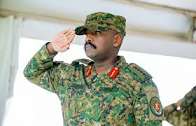
Uganda’s powerful army chief Muhoozi Kainerugaba has ordered an unprecedented shutdown of one of East Africa’s largest independent media groups after publicly declaring that he does not believe in a free press.
Kainerugaba, the son of long‑ruling President Yoweri Museveni and Chief of Defence Forces, announced on X that NTV Uganda and the Daily Monitor, both owned by Nation Media Group, were being closed “from today.” He added that in Uganda he does not believe in a free press and that the media should be “guided by cadres of the revolution.”
Within hours, the Daily Monitor reported it was under “military siege,” saying armed soldiers had surrounded its headquarters in Kampala. Staff described a full lockdown, with no one allowed to enter or leave the premises. Sister outlets Dembe FM, Spark TV, KFM and The East African were also forced off air or blocked from operating.
A senior NTV journalist, speaking anonymously for fear of reprisals, said troops stormed the broadcaster’s studios and offices in the early hours, cutting electricity and halting all programming. Nation Media Group later confirmed that a night‑time raid had disrupted operations across its Ugandan platforms.
The 52‑year‑old general has in recent months tightened his grip on the security apparatus, ordering arrests of opposition figures and activists. In his latest move, he directed police to arrest Nation Media Group’s managing director Susan Nsibirwa “on sight,” before abruptly rescinding the order and saying government spokesman Alan Kasujja would “deal with her.” Kasujja could not be reached for comment.
Kainerugaba accused the media group of a “lifetime of insults” against him and said the closures had been approved by his father, who has ruled Uganda for decades. The Daily Monitor, founded in 1992, has long been regarded as a key independent voice and frequent thorn in the side of Museveni’s government. In 2013, it was shut for nearly two weeks after reporting on an alleged plan to groom Kainerugaba as successor.
Press freedom organisations condemned the latest crackdown. The Committee to Protect Journalists called the use of security forces to enforce public threats against independent media a “deeply troubling escalation.” Kenyan‑based rights group Vocal Africa described the raid as a “dangerous silencing of the press” and demanded the withdrawal of troops and restoration of all broadcast services.
Kainerugaba has vowed that the affected outlets “will not re‑open without my permission” and warned that “many more” arrests are coming, deepening fears over the future of independent journalism in a country that already ranks near the bottom of global press freedom indices.