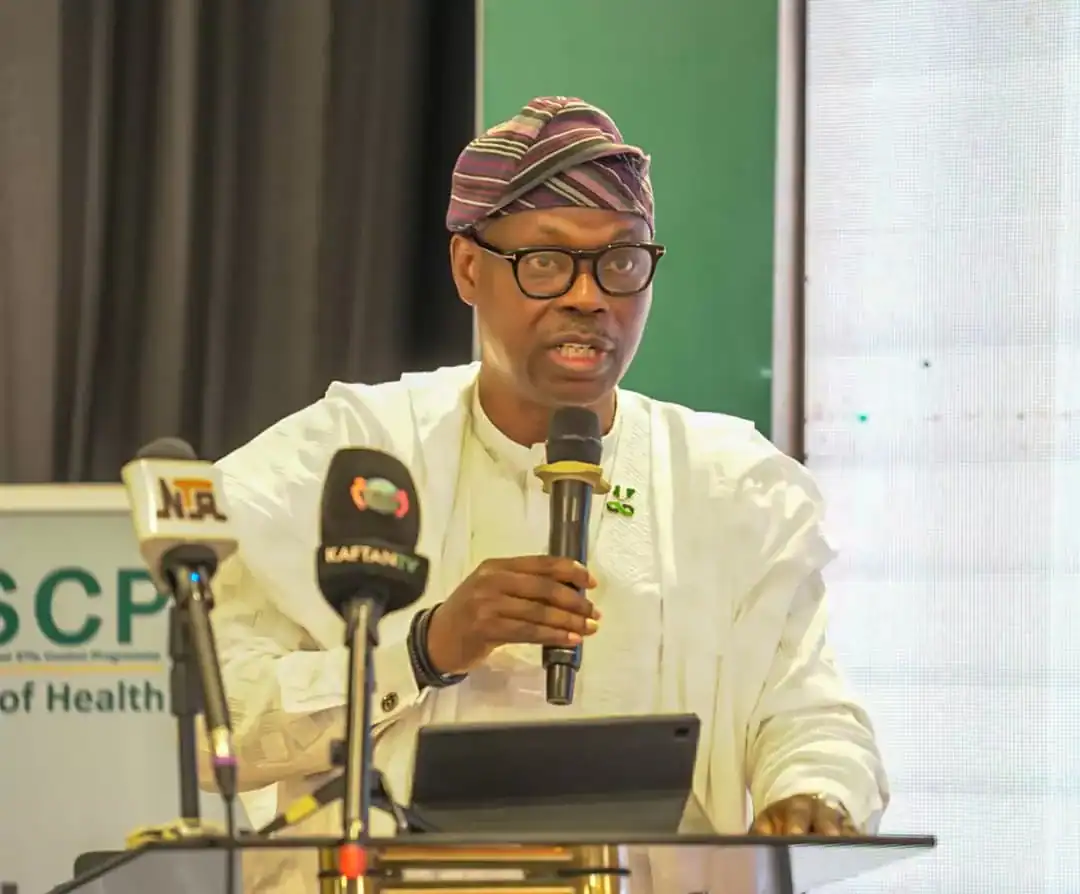
Nigeria is facing an escalating health emergency as the mass migration of doctors and other medical professionals continues to hollow out its already fragile healthcare system, the Minister of State for Health and Social Welfare, Iziaq Salako, has warned.
Speaking at the United Kingdom Global Health Summit at the Royal College of Physicians in London, Salako said the exodus, widely known as “japa”, has pushed the country’s health workforce to breaking point and is undermining efforts to deliver basic care to millions.
He revealed that Nigeria has only about four doctors per 10,000 people, less than half the World Health Organisation’s recommended minimum of 10 per 10,000. The shortfall is compounded by severe gaps in nursing, midwifery and allied health professionals, particularly in rural and hard-to-reach communities.
Salako described the global health workforce crisis as “a present emergency”, noting that Africa bears more than a quarter of the world’s disease burden but has under three per cent of its health workers. In Nigeria, he said, the impact is stark: public hospitals are overstretched, waiting times are lengthening and critical services are increasingly unavailable.
Drawing on United Kingdom data, the minister said 13,609 Nigerian health workers migrated to the UK between 2021 and 2022 alone, making Nigeria one of the largest suppliers of foreign-trained personnel to that system. A 2023 survey by NOI Polls and Nigeria Health Watch found that 57 per cent of Nigerian doctors had taken concrete steps to leave the country.
Salako stressed that each departing doctor represents a major loss of public investment, estimating that training a single physician in Nigeria can cost more than $200,000. “Every doctor who leaves effectively transfers scarce resources from one of the world’s most constrained health systems to wealthier nations,” he said, framing the trend as a question of global equity.
To stem the crisis, the government has expanded training capacity, recording about a 160 per cent increase in medical school admissions between 2023 and 2025, alongside growth in nursing, pharmacy and laboratory science programmes. Authorities are also strengthening community health worker training and implementing task-shifting policies to extend services in underserved areas.
Salako said Nigeria is seeking to harness its vast health diaspora, estimated at more than 150,000 professionals worldwide. Seven diaspora associations across the UK, United States, Canada, Germany, Australia and South Africa are planning a coordinated medical mission focused on knowledge transfer and institutional support.
He called for stronger international cooperation, urging wealthy countries to adhere to the WHO Global Code of Practice on ethical recruitment and to pursue bilateral agreements that allow skills gained abroad to be channelled back into countries like Nigeria. “No nation can solve the global health workforce crisis alone,” he warned. “Strengthening health systems in developing countries is global security.”