When Jordan Black joined SpaceX, he expected to work on rockets, not the hidden nervous system that makes them function. Yet as he helped scale wire harness production for Starship, he ran headlong into a problem the aerospace industry had quietly tolerated for decades: the way complex vehicles are wired still looks like a Cold War workshop.
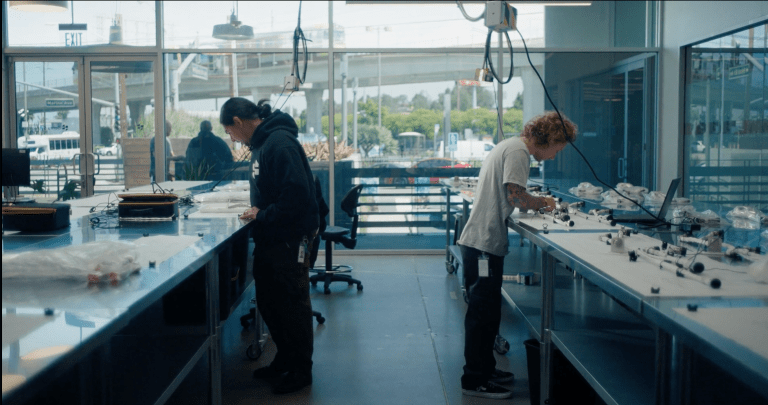
Wire harnesses are the bundled veins of electrical cabling that run through rockets, cars, aircraft, ships, and heavy machinery. They carry power and data, and as vehicles become more software-defined, they grow denser and more intricate. Despite that complexity, Black found the work was still done on wooden tables, with paper diagrams and painstaking manual labor.
He spent years visiting suppliers around the world and saw the same scene repeated. Skilled technicians, effectively artisans, built mission-critical wiring by hand with minimal digital oversight. Traceability was poor, design changes were hard to manage, and quality control depended heavily on human memory and paper trails.
Black and co-founder Benjamin Shanahan launched Senra to change that. Rather than replacing humans, they set out to wrap the manual craft in modern software, automation, and data discipline. Their pitch has resonated: the company has raised $65 million in Series B funding from a roster of top-tier investors, capital that will fuel new factories, software development, and expanded training.
Senra’s core product is Amp, a proprietary platform that standardizes every input in the wiring process and creates a digital twin of each harness. Engineers can track materials, revisions, and configuration changes in one system, while technicians on the floor follow precise digital work instructions instead of static drawings.
That level of control is not academic. Boeing’s Starliner program was forced into costly rework after discovering flammable tape in its wiring, a stark reminder that small oversights in harness design and assembly can cascade into major safety and schedule crises.
Senra trains its own workforce through what Black describes as the only federally certified wire harness training program, then layers in automation where it makes sense. Echoing a principle he absorbed at SpaceX, he argues that automation should come after processes are standardized, not before.
Today, Senra produces around 1,000 harnesses a month across two factories and is targeting 10,000 per month within a few years. Its customers span submarines, maritime systems, land-based defense vehicles, launch vehicles, and satellites, all sectors where reliability is non-negotiable.
For Black, the mission is simple: drag an overlooked but vital industry out of the analog past and into a world where wiring is engineered with the same rigor as the machines it powers.