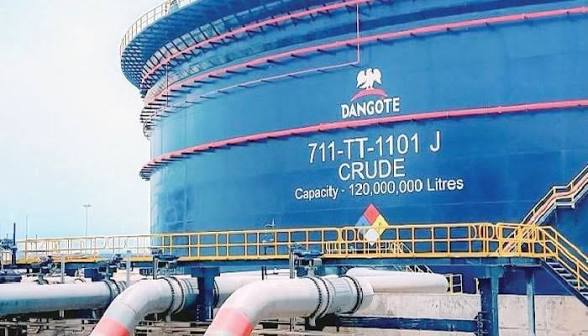
Dangote Petroleum Refinery has quietly recalled a number of engineers and technical staff after a tense face-off with organised labour that briefly disrupted operations at the multibillion-dollar complex, industry sources have confirmed.
The recall follows days of negotiations between refinery management and union representatives over working conditions, job security and the role of expatriate staff in critical operations. The dispute, which had seen some engineers withdrawn from key units, raised concerns about potential delays to the refinery’s ramp-up schedule and its ability to stabilise domestic fuel supply.
Union officials had accused the company of sidelining Nigerian engineers in favour of foreign contractors and of failing to fully implement agreed welfare and safety provisions. Management, in turn, was said to have warned that prolonged disruption could undermine sensitive commissioning processes and jeopardise commercial timelines.
According to people familiar with the talks, both sides eventually agreed to a phased return of engineers to duty, while a joint committee was set up to review staffing structures, training commitments and grievance procedures. The committee is expected to recommend a framework that balances the refinery’s technical demands with labour’s insistence on fair treatment and localisation of skills.
The refinery, located in the Lekki Free Zone, is widely seen as central to Nigeria’s ambition to end decades of dependence on imported refined products. Any sign of instability at the facility is closely watched by fuel marketers, regulators and international traders, who view its output as a potential game-changer for West Africa’s downstream market.
Analysts say the latest confrontation underscores the delicate labour relations challenge facing large industrial projects in Nigeria, where high unemployment, rising living costs and a history of industrial disputes often collide with investors’ push for efficiency and cost control.
Labour leaders are framing the outcome as a reminder that Nigerian professionals must not be relegated in strategic national assets, while company insiders insist the refinery remains committed to building a strong local talent pipeline through training and technology transfer.
With engineers now back on site, attention is shifting to whether the truce will hold and if the new joint mechanism can prevent future flashpoints. For a project that carries both economic and symbolic weight, sustaining industrial peace may prove as critical as any engineering milestone.