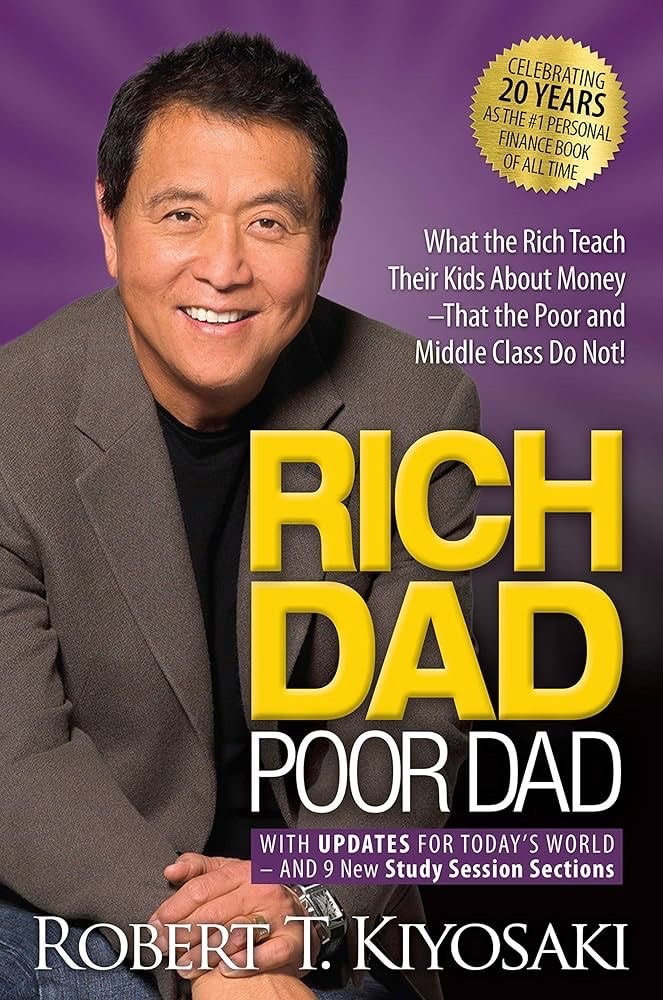
Robert T. Kiyosaki’s Rich Dad Poor Dad is far more than a simple manual on personal finance. It is a foundational manifesto that challenges the very core of how we perceive wealth, work, and the traditional path to success. At its heart, the book is a study of mindset, contrasting two diametrically opposed philosophies on life and money. For any visitor to this blog shop looking to transform their financial future, this book serves as an essential starting point because it dismantles the psychological barriers that keep most people trapped in a cycle of perpetual financial struggle.
The narrative is driven by the unique upbringing of the author, who was mentored by two influential father figures. His biological father, the Poor Dad, was a highly educated man with a PhD and a stable career in government education. He believed in the traditional virtues of academic excellence, job security, and a steady paycheck. On the other hand, his best friend’s father, the Rich Dad, was a high school dropout who built a business empire through street smarts and a deep understanding of how money moves. This dichotomy creates a powerful framework for the reader to examine their own beliefs. It forces us to ask whether we are following the advice of a Poor Dad who views a job as the only source of safety, or if we are listening to a Rich Dad who views money as a tool to be mastered.
One of the most revolutionary aspects of Kiyosaki’s teaching is his definition of assets and liabilities. In the world of traditional accounting, things like your personal home or your car might be listed as assets. Kiyosaki flips this on its head with a simple, practical definition: an asset is something that puts money in your pocket, while a liability is something that takes money out of your pocket. By this logic, the house you live in is actually a liability because it requires mortgage payments, taxes, and maintenance. In contrast, a rental property that generates monthly profit is a true asset. This realization is often a breakthrough moment for readers. It highlights why many middle class families feel house poor. They are surrounded by expensive things that they believe represent wealth, but those items are actually draining their cash flow every single month.
The book also shines a harsh light on the failures of the modern education system. Kiyosaki argues that schools are designed to produce excellent employees. They train people to be punctual, obedient, and technically skilled, but they completely ignore financial literacy. We spend years learning how to work for money, yet we are never taught how to make money work for us. This leads to what the author calls the Rat Race. The Rat Race is the exhausting cycle of working harder to earn more, only to see those earnings swallowed up by higher taxes and increased spending on liabilities. Breaking out of this race requires a shift from being an employee to becoming an investor or an entrepreneur.
Kiyosaki’s writing style is intentionally accessible. He avoids dense jargon that often makes financial books feel like chores. He uses conversational language and simple diagrams to illustrate complex flow of money concepts. This makes the book a powerful tool for anyone regardless of their background. However, the simplicity of the prose does not diminish the profundity of the message. The chapter titled The Rich Invent Money serves as a wake up call regarding the importance of financial intelligence. It encourages readers to develop their financial IQ by understanding the four pillars of wealth: accounting, investing, understanding markets, and the law. By mastering these, an individual can see opportunities that others miss and protect their wealth from being eroded by taxes and inflation.
Reflecting on the book’s impact, it is impossible not to feel a sense of both empowerment and frustration. It is empowering to realize that wealth is not reserved for the lucky few but is available to anyone willing to change their mindset and take calculated risks. At the same time, it is frustrating to see how many of us have been programmed to avoid risk at all costs. Kiyosaki teaches that the fear of losing money is often greater than the excitement of winning. This fear keeps people stuck in mediocre jobs. He encourages a shift in internal dialogue. Instead of saying I cannot afford it, which shuts down the brain, we should ask how can I afford it? This simple linguistic shift triggers the mind to look for solutions and sparks the entrepreneurial spirit that this blog shop aims to support.
While the book has faced some criticism for its repetitive nature and its somewhat harsh portrayal of the Poor Dad figure, these critiques are minor compared to the value of the overarching message. The core truth that financial freedom comes from owning assets that produce passive income is as relevant today as it was when the book was first published.
For the young professional, the aspiring business owner, or the student just starting their journey, Rich Dad Poor Dad is a call to action. It demands that you take responsibility for your financial education. It reminds us that your most powerful asset is your mind. The time you invest in training it is the most profitable investment you will ever make. It is not just about the numbers on a bank statement. It is about the freedom to live life on your own terms without being tethered to a desk by the fear of a missing paycheck.
In Conclusion, this book is a must read for anyone tired of working hard without seeing progress. It provides the mindset shift needed to stop being a servant to money and start becoming its master. By learning to build a portfolio instead of just chasing a paycheck, you can navigate your future with clarity. It is a masterpiece that belongs on every bookshelf and should guide every financial decision you make.