It's Not Just a Painful Period
Ladi became familiar with menstruation later after her first experiences, after realizing that other girls her age experienced the same monthly cycle. However, a few years earlier she had no idea what was happening to her body. At that time, she felt afraid, confused, and sad. As she grew older, Ladi began to understand menstruation and everything that came with it. Sometimes she experienced mild pain during her cycle, but it was manageable and she could still go about her daily activities without interruption. Over time, the discomfort became something she learned to live with.
However, later on in life, things changed during her senior year in boarding school. One day while she was in class, a sharp pain suddenly struck her. It was stronger than anything she had felt before. Her mind went blank and she could no longer concentrate in class, it was a Math class, she quickly rushed out of the classroom in her uniform uncomfortably, and, returned to the hostel dormitory, where she could finally express the pain she had been holding in. Ladi lay on the floor in tears, crying in agony and she became unhappy whenever her menstrual cycle approached.
Ladi grew up accepting pain as normal, nobody talks about it, there are a few girls who go through similar pain, but there is not enough care for them. And while some girls understood what she was going through, especially those who had experienced similar discomfort, others dismissed it, thinking she was being dramatic or simply seeking attention.
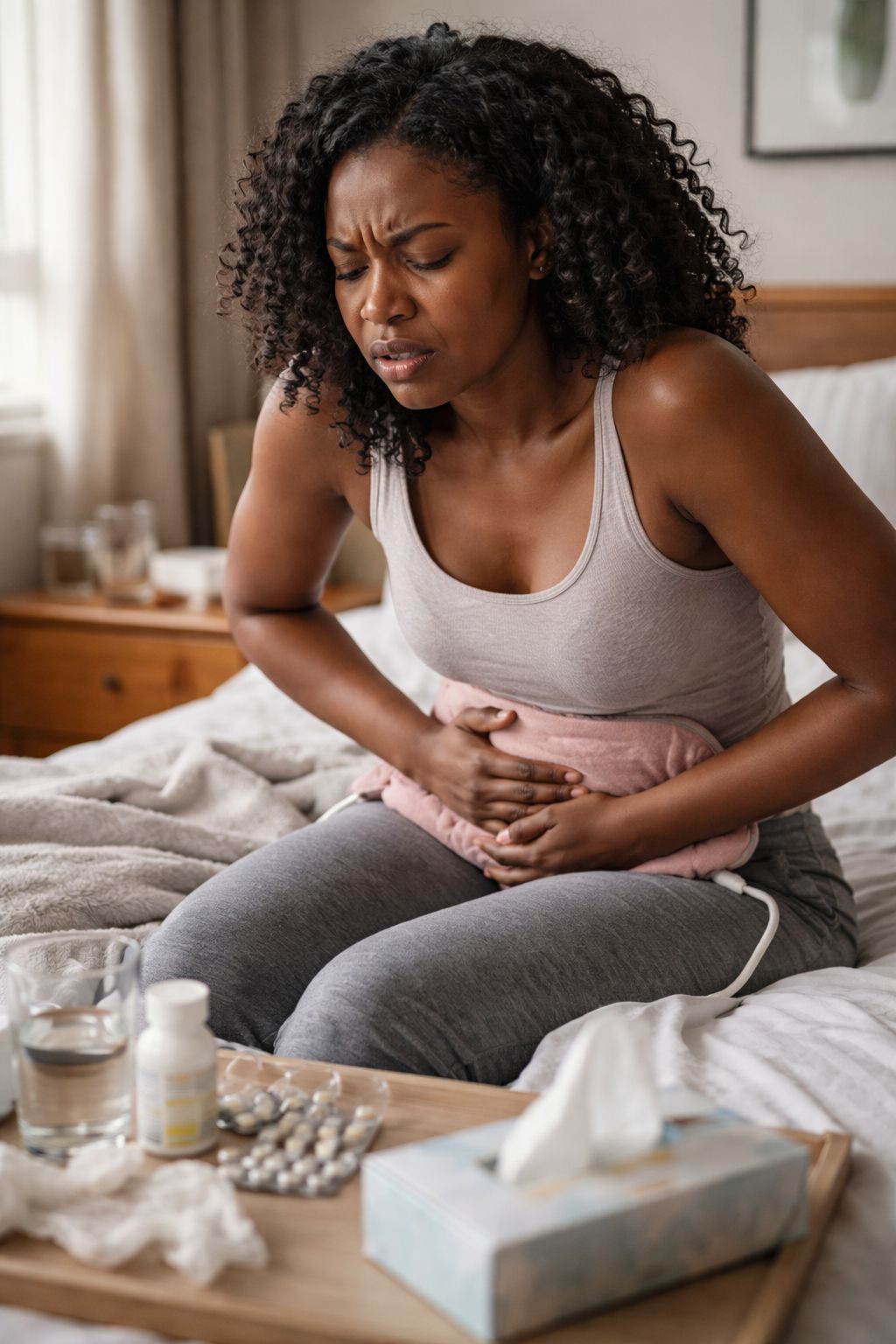
After secondary school, Ladi gained admission into a tertiary institution. Unfortunately, managing her academic life alongside her condition became increasingly difficult. Whenever she was on her monthly cycle, the pain sometimes forced her to miss classes and stay indoors, there were days when she stayed indoors for hours, trying to cope with the pain through rest, hot compresses, . At the age of 21, after enduring pain for so long, Ladi decided to visit a gynecologist for a proper medical assessment. After examining her, the doctor diagnosed her with dysmenorrhea.
Dysmenorrhea is the medical term used to describe painful menstrual cramps that occur during menstruation. These cramps are caused by strong contractions of the uterus as it sheds its lining. While many women experience mild discomfort during their periods, dysmenorrhea refers to pain that can become severe enough to interfere with daily activities such as school, work, or normal routines.
Some cases of severe menstrual pain are linked to an underlying condition known as endometriosis.
Endometriosis occurs when tissue similar to the lining of the uterus grows outside the uterus, such as on the ovaries, fallopian tubes, or other organs in the pelvic region. This tissue still responds to hormonal changes during the menstrual cycle, which can lead to inflammation, severe pain, and sometimes fertility challenges.
Endometriosis is one of the major causes of secondary dysmenorrhea. Secondary dysmenorrhea refers to menstrual pain that is caused by an underlying medical condition, unlike primary dysmenorrhea, which is the more common menstrual cramps experienced without a specific disease. In cases of secondary dysmenorrhea, the pain may worsen over time and can sometimes occur even outside the menstrual period.
Common signs and symptoms associated with endometriosis or secondary dysmenorrhea include severe menstrual cramps, pelvic pain, heavy menstrual bleeding, pain during or after sexual intercourse, pain during bowel movements or urination during menstruation, fatigue, nausea, and sometimes difficulty becoming pregnant. Because these symptoms are often mistaken for normal menstrual pain, many women endure the condition for years before receiving a proper diagnosis.
Research suggests that about 10 in 40 women are likely to experience endometriosis or related symptoms at some point in their lives, making it a significant women’s health concern that deserves greater attention and awareness. Although Ladi was prescribed hormonal medication to manage her condition, the treatment came with several side effects. She began to experience frequent headaches, nausea, fatigue, and swelling. These side effects made her feel frustrated and unhappy. She started questioning how much the condition had affected different areas of her life, her studies, her future career, and her overall well-being.
Ladi’s story is not unique. Many women live with reproductive health conditions such as endometriosis, fibroids, cervical cancer, ovarian cancer, and others. These conditions can significantly affect their quality of life, especially in places where healthcare awareness and support systems are limited. Many women endure their pain silently, often without proper understanding or diagnosis.
March is Endometriosis Awareness Month, a time dedicated to raising awareness about this condition and the struggles faced by many women around the world. Ladi’s story is a reminder that menstrual pain should not always be dismissed as “normal.” There is a need for greater awareness, better healthcare and support systems, and more research into women’s reproductive health so that those who suffer in silence can receive the care and understanding they deserve.