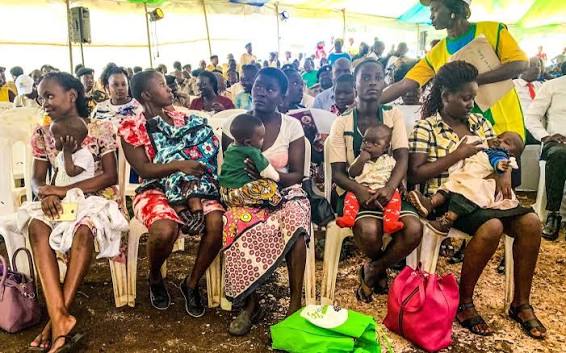
The World Health Organisation has confirmed that the first malaria vaccine to be deployed at scale in Africa is sharply cutting child deaths and severe illness in three pioneering countries, marking a major breakthrough in the fight against one of the continent’s deadliest diseases.
An evaluation of the RTS,S/AS01 malaria vaccine, conducted through the Malaria Vaccine Implementation Programme in Ghana, Kenya and Malawi, found that roughly one in eight deaths among age-eligible children was averted over a four-year period. The findings, published in The Lancet, draw on real-world data from routine immunisation systems between 2019 and 2023.
Researchers reported that the vaccine substantially reduced severe malaria cases and hospitalisations in areas with moderate to high transmission, where children face repeated infectious mosquito bites from infancy. The impact, WHO experts say, is expected to be similar or greater in other African countries now rolling out malaria vaccines.
Kate O’Brien, Director of Immunisation, Vaccines and Biologicals at WHO, said the results provide robust proof that malaria vaccination can reshape child survival prospects in Africa. She stressed that demand from governments and communities is strong and that manufacturers can meet current needs, but warned that financing gaps are slowing expansion.
Malaria remains a leading killer of African children despite decades of control efforts using insecticide-treated nets, indoor spraying and preventive medicines. Hundreds of thousands of children still die each year, most of them under the age of five.
Daniel Ngamije Madandi, Director of WHO’s Global Malaria Programme, said the vaccine is most powerful when layered onto existing tools. Countries that combine vaccination with nets, rapid diagnosis, effective treatment and seasonal chemoprevention are seeing the greatest gains, he noted.
The study also found that the four-dose RTS,S schedule created new contact points with health services, enabling children to receive other routine vaccines such as measles and meningitis, as well as vitamin A and bed nets. Importantly, there was no evidence that introducing the malaria vaccine reduced uptake of other childhood vaccines or undermined use of established malaria prevention measures.
Twenty-five malaria-endemic African countries have now incorporated WHO-recommended vaccines, including RTS,S and R21, into their childhood immunisation programmes, with more than 10 million children targeted each year. However, many governments still lack the funds to scale up to national coverage, leaving millions of vulnerable children without access to a proven life-saving tool.