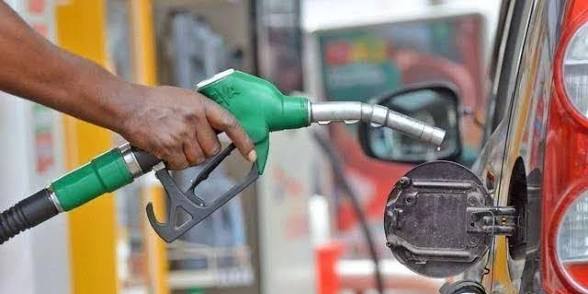
The Federal Competition and Consumer Protection Commission has cautioned operators in Nigeria’s downstream petroleum sector against exploiting consumers by refusing to reflect the sharp fall in global crude oil prices at the pump.
In a statement, Executive Vice Chairman and Chief Executive Officer, Tunji Bello, disclosed that ongoing surveillance of the downstream market shows only marginal reductions in ex-depot and pump prices, despite a significant drop in international crude benchmarks. According to him, price adjustments by local refiners, depot owners, marketers and retail outlets remain far below what current global conditions should justify.
Bello emphasised that while the downstream sector is deregulated and the commission does not fix or approve fuel prices, it has a clear mandate to ensure fair competition and protect consumers from abuse. He warned that the commission will investigate and sanction any operator found to be engaging in anti-competitive, deceptive or exploitative conduct under the Federal Competition and Consumer Protection Act.
He noted a pattern in which marketers rapidly increase pump prices whenever crude oil rises, yet delay or minimise reductions when the international market softens. Such behaviour, he argued, undermines the basic principles of a competitive market, which should work “fairly in both directions” to reflect both upward and downward movements in input costs.
Global crude prices have retreated sharply to about 73 dollars per barrel, following a ceasefire understanding involving Iran and the reopening of the Strait of Hormuz, after peaking near 120 dollars per barrel at the height of regional tensions. Crude has effectively returned to levels seen earlier in the year, but domestic fuel prices have not followed suit.
During the price spike, petrol in Nigeria climbed to between N1,350 and N1,500 per litre, while diesel approached N2,000 per litre. Despite the easing of geopolitical tensions and the subsequent fall in crude prices, petrol still sells for about N1,200 per litre in many parts of the country.
Consumer advocates and market analysts argue that, given the scale of the global price correction, Nigerians should by now be paying well below N1,000 per litre. The commission’s intervention signals growing regulatory scrutiny of pricing behaviour in the sector and raises expectations that marketers will be compelled to pass on more of the benefits of cheaper crude to consumers.