It began in secondary school.
There was this test coming up—Mathematics, the kind that makes the whole class suddenly discover religion. Everyone was pretending to be calm, but you could feel it in the air: tension, silent panic, last-minute “who has solved number 4?” whispers.
But my own case was different. Mine wasn’t just exam fear. It was fear of the result. The “what if I don’t pass?” kind that sits on your chest like a stone.
The night before the exam, I opened my notebook at exactly 8:17pm. I remember the time because I kept looking at the clock like it was going to save me.
I read the first page. Closed it. Opened it again. Read the same thing. Closed it again.
Nothing was entering my head. Not because I didn’t understand it, but because my brain had already started writing the outcome: You will fail. You will disappoint. You will be laughed at.
At some point, I stopped studying completely and just stared at the wall.
I told myself, “If I don’t try too hard, it won’t hurt too much when I fail.”
That was the lie I believed.
The next morning, I walked into the exam hall like someone going to a judgment. My legs were fine, but my mind was shaking.
When the paper was shared, I didn’t even look at the questions properly. I just scanned them and felt my chest tighten.
I knew some of the answers. I really did. But I didn’t trust myself enough to even start.
So I did something worse than failing.
I gave up quietly.
I filled in what I could, left what I couldn’t, and submitted early just so I could escape the feeling.
When results came out, I didn’t fail badly. I was average. Not the disaster I imagined. Not the shame I had already built in my head.
But I remember something more important than the score.
After the exam, my friend looked at me and said, “Guy, you knew that thing. Why did you freeze?”
I didn’t answer immediately.
Because I didn’t know how to explain that I wasn’t afraid of the subject.
I was afraid of what failing would say about me.
That day I learned something small but heavy:
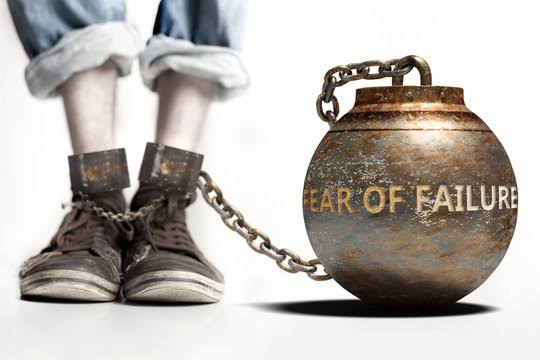
Sometimes fear doesn’t just predict failure—it manufactures it.
And the worst part is, it convinces you that you were never enough to begin with.
After that, I didn’t stop being scared overnight.
But I started doing something different.
Even when my hands were shaking, I started writing the first line.
Even when my mind said “you’ll fail,” I answered with action instead of silence.
Because I realized something late but true:
Failure is painful.
But fear that stops you from trying? That one finishes the job before you even begin.