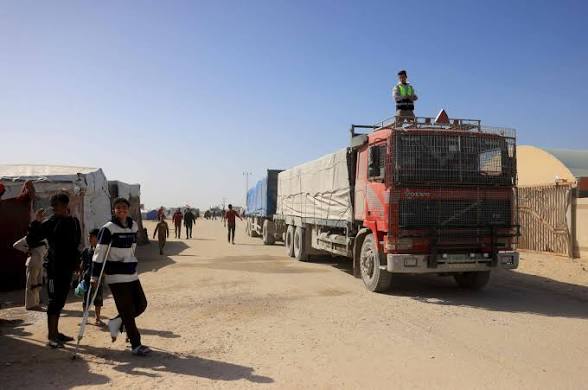
The Rafah border crossing between Gaza and Egypt has partially reopened after weeks of complete closure, allowing a limited number of Palestinian patients to leave the besieged enclave and some stranded travelers to return home.
Officials on both sides of the frontier describe the move as a tightly controlled, humanitarian-focused reopening rather than a full restoration of traffic. An Egyptian Red Crescent official, speaking on condition of anonymity, said the crossing was operating in both directions but only for “limited movement,” with priority given to medical cases.
According to a Palestinian official from the border crossings committee, the first group to pass through included eight wounded Palestinians accompanied by 17 relatives and caregivers. Many had been waiting for weeks for permission to travel to Egyptian hospitals, where they can receive treatment unavailable in Gaza’s shattered health system.
Television footage broadcast by Egypt’s Al-Qahera News showed patients who had completed treatment in Egyptian facilities preparing to re-enter Gaza. Ambulances lined up on both sides of the crossing, transferring the sick and injured through a corridor heavily guarded by security forces.
For Gazans, Rafah has long been more than a border post. It is a rare exit from isolation, a route to life-saving medical care and one of the few channels through which divided families can reunite. Its closure cut off thousands of people who had been approved for treatment abroad or were attempting to return to their homes.
The crossing was seized by Israeli forces nearly two years ago during the war with Hamas, placing its operation under a complex web of military, security and diplomatic arrangements. It briefly reopened in early February before being shut again at the end of the month, after Israel closed all crossings in response to strikes on Iran.
Israel’s Coordination of Government Activities in the Territories, the defense ministry body overseeing civilian affairs in the Palestinian territories, confirmed the renewed operation of Rafah but released few details. Officials indicated that anyone entering Gaza would be subject to additional screening and security checks.
The European Union’s border assistance mission, redeployed to Rafah earlier this year, is monitoring the limited traffic. Current arrangements cap entry at 50 patients per day, each allowed two companions, underscoring how far the crossing remains from normal operation and how narrow the lifeline is for Gaza’s population.