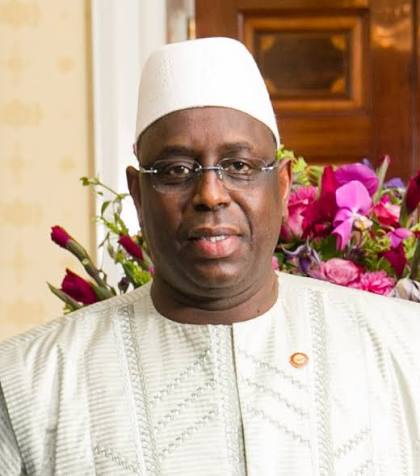
Senegal’s former president Macky Sall is preparing for one of the most closely watched job interviews in global diplomacy, as he appears before the United Nations General Assembly to audition for the role of secretary-general.
Sall is one of four contenders vying to succeed António Guterres, whose second term as UN chief ends later this year. He is also the only African in the field, a fact that underscores both the continent’s ambitions and its internal divisions over his candidacy.
The other hopefuls are drawn largely from Latin America, the region many diplomats say is “due” the post under the UN’s informal tradition of regional rotation. They include Chile’s former president and ex-UN human rights chief Michelle Bachelet, Argentina’s Rafael Mariano Grossi, who heads the International Atomic Energy Agency, and Costa Rican economist Rebeca Grynspan, secretary-general of the UN Trade and Development agency.
Each candidate will undergo a three-hour “interactive dialogue” with ambassadors from the UN’s 193 member states, defending their record and outlining a vision for an organisation struggling to stay relevant amid multiplying wars and great-power rivalry.
The stakes are unusually high. The Security Council has been paralysed over conflicts from Ukraine to Gaza and Iran, fuelling criticism that the UN is failing in its core mission to maintain international peace and security. Whoever replaces Guterres will inherit a body whose authority is questioned abroad and whose internal cohesion is fraying.
Sall arrives with a decade of experience as Senegal’s president and a reputation as a regional power broker in West Africa. Yet his bid has exposed rifts at home and across the continent. He was formally nominated by Burundi, but Senegal has pointedly declined to endorse him, and the African Union has been unable to rally behind a single African candidate.
Diplomats and analysts say that hesitation reflects a harsher geopolitical climate. Potential candidates now fear that a misstep in the public hearings could alienate Washington, Beijing or Moscow, with real diplomatic costs. Unlike the crowded 2016 race, when 13 contenders used the process to raise their profiles, only four have stepped forward so far.
Behind the scenes, the familiar power dynamics remain. The General Assembly will vote, but the decisive recommendation comes from the Security Council’s five permanent members, each wielding a veto. Publicly, the race is about vision and leadership. Privately, it will turn on whether any candidate can emerge as acceptable to all of the world’s most powerful capitals.