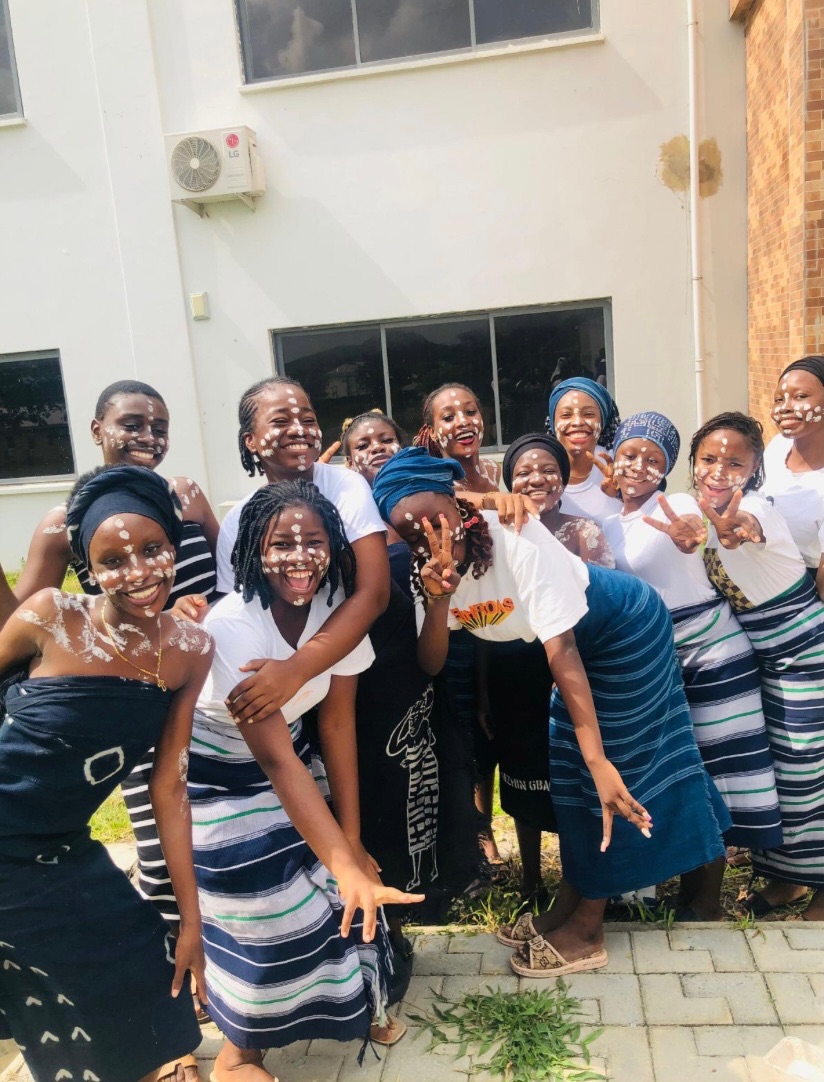
As a student of Film and Multimedia Studies at the University of Abuja, I registered for GST 112: Nigerian People and Culture, a compulsory course for all 100-level students. This course was not just about reading from books — it was about learning the history, beliefs, and traditions of the different cultures that make up our country.
On July 16th, our lecturer, Mr. David Abakpa, gave us an assignment as part of our Continuous Assessment (C.A) test. The task was for each department in the Faculty of Communication and Media Studies to research and represent a unique Nigerian culture. My department, Film and Multimedia Studies, was assigned the Bagyi culture. I had heard the name “Bagyi” before but didn’t know much about them. All I knew was that they were a group of people with interesting customs and traditions. This assignment was my chance to learn more.
The Bagyi culture is truly fascinating. They have a unique way of dressing, with colorful traditional clothes and headgear. Their food is different from what I am used to, and they have dances, music, and customs that are special to them. The more I read about them, the more curious I became. I wanted to see how my department would bring their culture to life on stage.
We had less than a week to prepare, but my coursemates wasted no time. Some volunteered to rehearse traditional Bagyi dances. Others offered to prepare traditional dishes so that people could taste their food. Everyone was excited, and you could feel the energy in the group. Unfortunately, I couldn’t attend the rehearsals because my hostel is far from my faculty, and going back and forth every day would have been stressful. Still, I wanted to support the team, so I contributed financially, just like many other coursemates who couldn’t be there physically. I believed my coursemates would do a great job representing us.
The day of the presentation finally came. I had a class from 8:00 a.m. to 10:00 a.m., so I quickly prepared and made sure I had eaten before heading to the Convocation Ground. The event was scheduled to start at 3:00 p.m. and end at 6:00 p.m., but people started gathering earlier.
When I arrived, I was amazed by what I saw. The place was full of students dressed in different traditional attires — bright wrappers, flowing gowns, beads, and head ties. Each department had chosen a culture to represent, and you could tell they had put in a lot of effort. The air was filled with the sound of drums, singing, and laughter. Some groups were dancing, others were arranging food stands, and a few were still rehearsing their moves in one corner.
I saw the Yoruba group with their talking drums and colorful aso-oke. The Benin group came with coral beads and beautiful patterned wrappers. There were also Tiv dancers with black and white striped clothing, Igbo girls carrying baskets, and many more. It was like stepping into a living museum of Nigerian culture.
When it was finally time for my department to present the Bagyi culture, I felt a mix of pride and excitement. The performance started in a very dramatic way — a girl walked in front, carrying a clay pot with smoke rising from it. She walked slowly and gracefully, like she was leading a sacred ceremony. Behind her was the student giving our speech. His voice was loud and clear as he introduced the Bagyi people, their location, history, and way of life.
Then came the dancers, dressed in traditional Bagyi outfits. The boys wore wrappers tied around their waists, and some had leaves and beads as part of their costumes. The girls had colorful skirts and scarves tied across their chests. They began their dance, moving to the sound of traditional drums. Their steps were quick and lively, and the rhythm was infectious — even people in the audience started clapping along.