Israel’s decision to appoint an ambassador to Somaliland has triggered a wave of diplomatic condemnation from Muslim-majority states and regional organisations, sharpening tensions over the status of the self-declared republic in the Horn of Africa.
In a joint statement circulated by Saudi Arabia’s Ministry of Foreign Affairs, ministers from 12 Muslim-majority governments, including Egypt, Turkey, Pakistan and Kuwait, denounced Israel’s move as a flagrant violation of Somalia’s sovereignty and territorial integrity. The signatories reaffirmed their recognition of Somalia’s internationally accepted borders and urged all states to refrain from steps that could be interpreted as legitimising secessionist entities.
The African Union has also weighed in, rejecting Israel’s recognition of Somaliland and the subsequent ambassadorial appointment as null and void. The AU, which has consistently backed Mogadishu’s claim over the territory, warned that unilateral recognition of breakaway regions risks emboldening separatist movements and destabilising an already fragile region.
Israel’s outreach to Somaliland follows its decision to formally recognise the territory as an independent state, making it the first and so far only country to do so. The move drew immediate criticism from Somalia’s federal government, which recalled its ambassador from Tel Aviv and launched a diplomatic campaign to rally opposition among Arab and African partners.
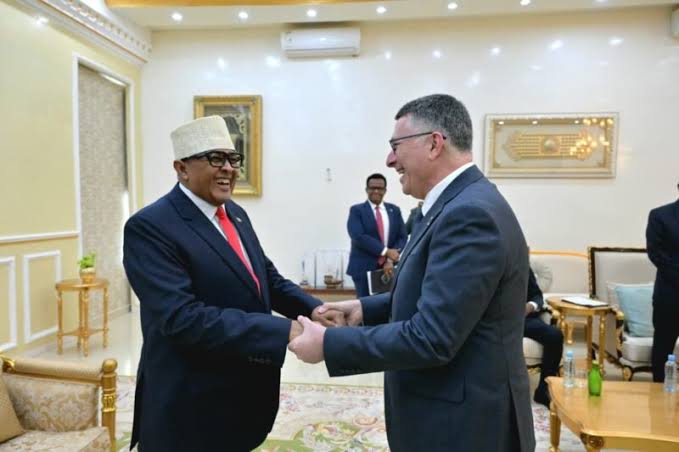
Israel has named Michael Lotem, a veteran diplomat and former ambassador to Kenya, as its first envoy to Somaliland. In a reciprocal step, Somaliland presidential adviser Mohamed Hagi, who played a key role in brokering the recognition, has been approved as Somaliland’s first ambassador to Israel.
Speculation over Israel’s strategic motives has intensified. Somaliland’s coastline faces the Gulf of Aden, a vital maritime corridor opposite Yemen. Regional analysts say closer ties could give Israel a valuable foothold near Red Sea shipping lanes and conflict zones where Iranian-backed groups, including Yemen’s Houthi movement and Lebanon’s Hezbollah, operate.
Rumours that Israel may seek to establish a military facility in Somaliland have further alarmed neighbouring states, which fear the Horn of Africa could become an extension of wider Middle Eastern rivalries. Somaliland authorities have not publicly confirmed any such plans but have welcomed Israel’s recognition as a breakthrough in their decades-long quest for international legitimacy.
For now, the diplomatic fallout underscores a deepening divide: Israel and Somaliland framing the relationship as a sovereign choice between two partners, and much of the Arab and African world viewing it as a direct challenge to Somalia’s unity and regional stability.