When Technology Fakes Reality
Technology has greatly transformed the way information is produced and shared across the world. Through the internet, social media, and digital tools, people can easily access news, images, and videos within seconds. However, as technology continues to advance, it has also created new challenges for communication. One of the most notable examples is deepfake technology.
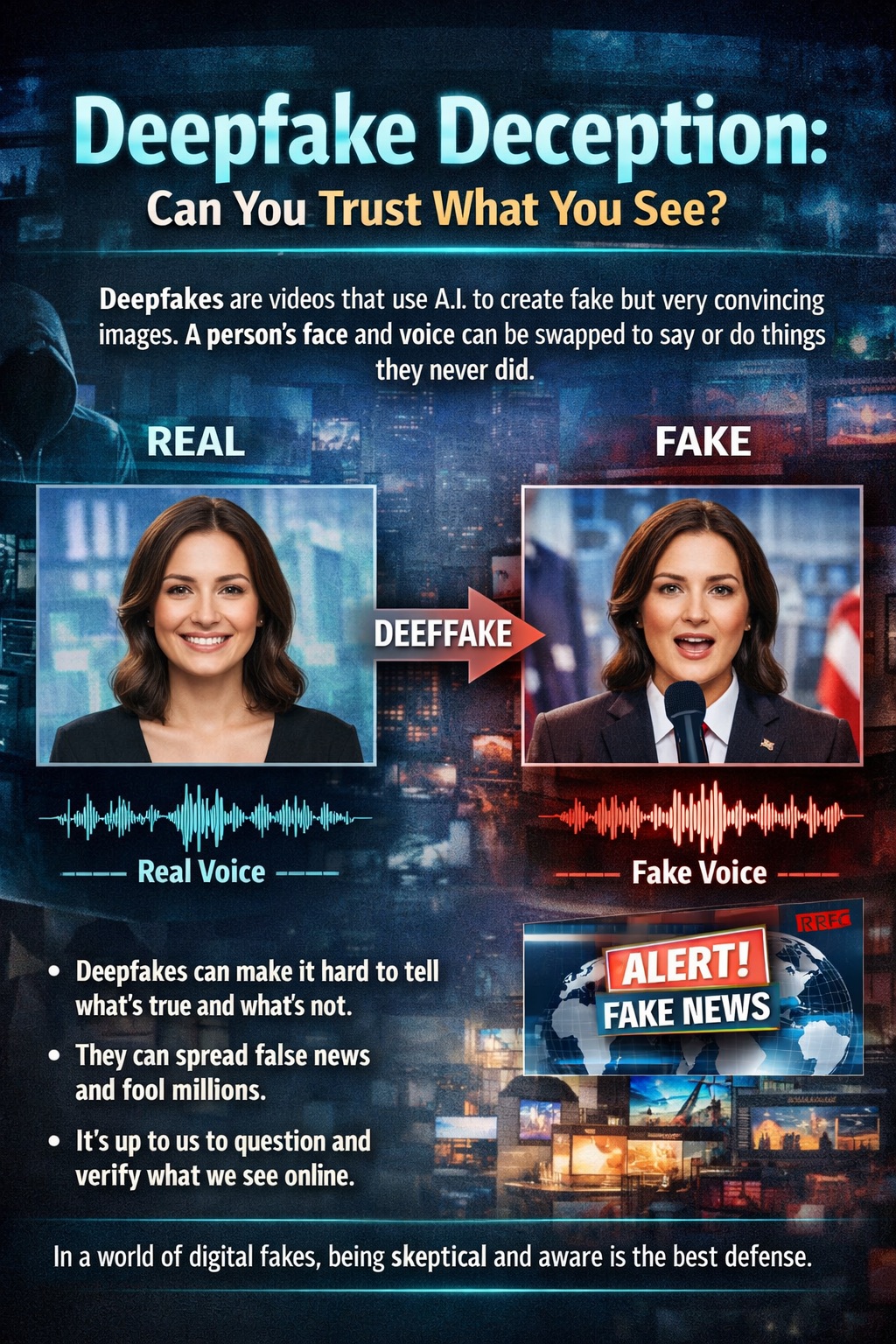
Deepfakes are created using artificial intelligence to manipulate videos, images, or audio recordings so that they appear authentic even though they are not real. With this technology, a person’s face can be placed onto another person’s body, or their voice can be altered to make it seem as if they said something they never actually said. Because these videos are often very realistic, it can be extremely difficult for viewers to recognize that the content has been manipulated.
In the field of mass communication, deepfakes present a serious concern. They can be used to spread misinformation, fake news, or propaganda, especially on digital platforms where information spreads quickly. For example, a deepfake video of a political leader or public figure could easily mislead thousands or even millions of people before the truth is discovered. This can damage reputations, influence public opinion, and reduce trust in the media.
Because of this, media literacy and responsible communication have become more important than ever. Journalists, media professionals, and audiences must learn to question digital content and verify information before believing or sharing it.
Conclusion:
Although technology continues to bring many benefits to communication, it also requires people to be more careful and critical about the information they consume. Understanding how technologies like deepfakes work helps society stay informed, avoid deception, and maintain trust in the media.