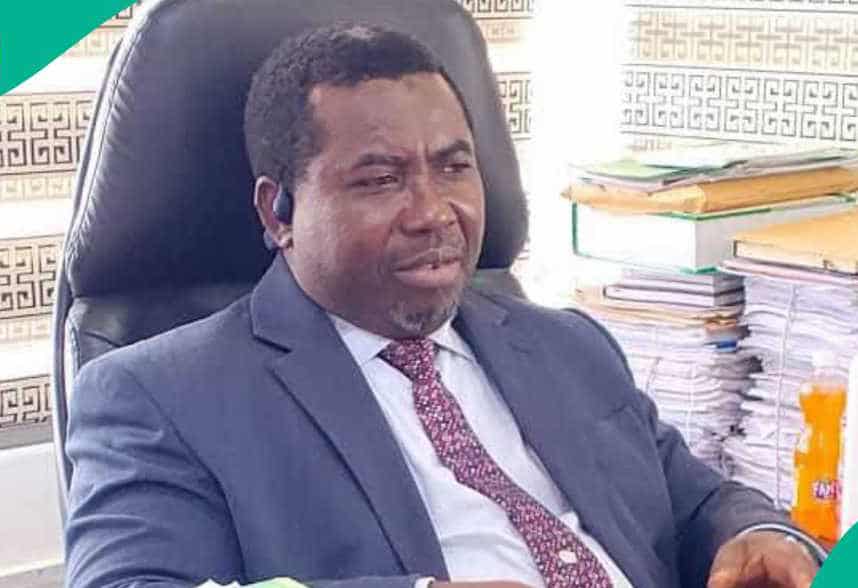
Nigeria’s electoral credibility is on the line,at least, that’s the latest alarm from Professor Joash Amupitan (SAN), the new Chairman of the Independent National Electoral Commission (INEC). In a dramatic address at the Nigeria Civil Society Situation Room National Stakeholders Forum in Abuja, Amupitan sensationally revealed that Nigeria’s voter register is riddled with the names of the dead, including “prominent figures” whose deaths are public knowledge. According to him, if this mess isn’t cleaned up, the 2027 general elections could be a disaster.
Amupitan didn’t mince words, claiming the register hasn’t had a proper clean-up since 2011. He stopped short of naming names, but hinted that even a famous Anambra leader who died 15 years ago is still listed as a voter. “When someone who passed away 15 years ago, known both locally and internationally, remains on the voter register, it raises concerns about credibility,” he declared, fanning the flames of public doubt.
His comments came as he touted the numbers from the just-concluded first phase of the Continuous Voter Registration (CVR) exercise, which ended December 10. According to INEC, 2,685,725 applicants completed their registrations,1,576,137 online and 1,109,588 in person. Osun, Kaduna, Plateau, Imo, Borno, and Lagos states reportedly led the pack in turnout, but the real story, Amupitan insists, is the “ghost voters” still haunting the register.
Amupitan is now pinning his hopes on the upcoming “claims and objections” window, opening December 15, where citizens are supposed to help clean up the register. But he admits participation has been abysmal in the past, with only 20 percent turnout in Anambra’s last review. “Some of the challenges we face stem from low participation in this stage,” he lamented, shifting some blame to the public.
Looking ahead, INEC plans to move registration centres closer to communities in the next phase, starting January 5, 2026. The hope? That more people will show up and help fix the register. But with the scale of the problem, critics are already questioning whether this will be enough.
And it’s not just dead voters causing headaches. Amupitan also raised the spectre of vote-buying and financial inducement, saying INEC has called on the police and EFCC for updates on electoral offences. He was quick to clarify that while INEC can prosecute, it can’t arrest suspects,leaving the heavy lifting to law enforcement.
On the tech front, Amupitan hyped up the Bimodal Voter Accreditation System (BVAS) and the INEC Result Viewing Portal (IReV) as game-changers for transparency. But he admitted that poor network coverage is a major stumbling block, with real-time uploads often delayed. “A tool like BVAS is only as good as the network it runs on,” he said, painting a picture of a system at the mercy of telecom providers.
In a particularly dramatic moment, Amupitan warned about the risk of “external interference,” suggesting that a powerful politician could convince a service provider to shut down networks on election day. “We do not have control over these networks,” he confessed, raising fresh fears about the integrity of the process.

.jpeg?alt=media&token=96b327a5-8e62-4ed1-a078-308aff149ed1)