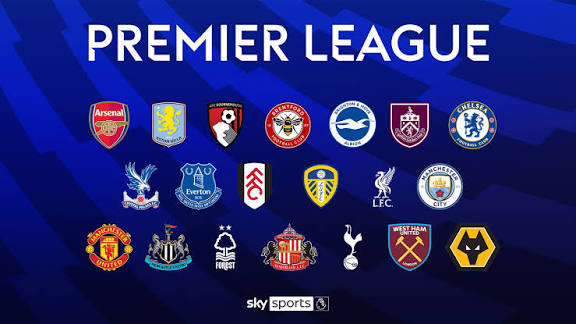
The current Premier League landscape differs significantly from earlier in the season, with updated performance indicators reshaping the perceived hierarchy of all 20 clubs. Several managers who were previously recognised for strong starts have since left their positions, early overperformers have regressed toward expected levels, and two historically dominant clubs, Arsenal and Manchester United, have materially shifted their competitive profiles.
Arsenal rank first not only because they lead the league on points, but because underlying metrics place them among the most effective teams in Europe. When penalties and set pieces are removed from the analysis, their expected-goal and chance-creation data already indicate an elite side. When set-piece output is reintroduced – including corners, free kicks and long throws – their advantage increases. Their efficiency from dead-ball situations has converted a strong title challenger into a clear statistical outlier at the top of the division.
This position has been achieved despite low output from the centre-forward position. Arsenal’s three strikers have produced only six non-penalty league goals combined, and high-cost acquisition Viktor Gyökeres has not consistently influenced high-leverage matches. Defensive solidity, territorial control in midfield and goal contributions from wide players and advanced midfielders have offset this deficiency. If Kai Havertz and Gabriel Jesus return to prior performance levels, or if the club acquires a more productive striker, projections for Arsenal’s attacking ceiling increase further.
Manchester United have transitioned from a mid-table statistical profile to that of a clearly above-average side. Previously characterised by mediocre underlying numbers, they now record one of the strongest expected-goal differentials in the league and have a high probability, based on current trends, of qualifying for the Champions League. The dismissal of Ruben Amorim and the appointment of Michael Carrick have coincided with a shift toward more direct, fast-transition football.
United rank near the top of the league for goals generated from ball recoveries and high turnovers, and they attempt more first-time shots than any other team. Casemiro has provided stability at the base of midfield, while transition-oriented attackers such as Bryan Mbeumo have benefited from a system designed to exploit space immediately after regaining possession. Although the sample size under Carrick is limited and some positive variance is evident, season-long metrics indicate that the improvement is not solely the result of short-term form.
Current data does not place Manchester United in the title-contending bracket, and the performance gap to Arsenal remains substantial. However, the discussion around the club has shifted from ongoing structural crisis to plausible medium-term progress. In a season marked by managerial turnover and evolving tactical approaches, Arsenal appear constructed to maintain their position at the top, while Manchester United now project as a relevant and sustainably competitive side rather than a purely reputational heavyweight.