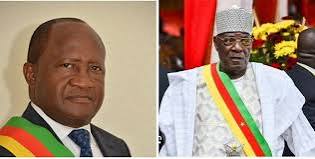
Cameroon’s political landscape has shifted at the heart of its legislature, as Théodore Datouo replaces Cavaye Yeguié Djibril as president of the National Assembly, ending one of the longest tenures in the country’s history.
Datouo, a long-serving deputy from Bangou in the Western Region, was elevated from his position as vice president of the assembly after being endorsed by the Central Committee of the ruling Cameroon People’s Democratic Movement, RDPC. His selection confirms the party’s grip on the lower house, but also signals a generational and regional rebalancing within the leadership.
Cavaye, who represented the Mayo-Sava constituency in the Far North, had presided over the National Assembly since the early years of Cameroon’s return to multiparty politics. Over more than three decades, he became a central figure in the institutional architecture that has underpinned President Paul Biya’s long rule, steering key constitutional revisions, budget debates and security-related legislation.
Datouo is not an unknown quantity within the system. A trained engineer and influential party cadre, he was the driving force behind the conception and construction of the National Assembly’s new headquarters, widely referred to as the Paul Biya Glass Palace. The gleaming complex has been presented by authorities as a symbol of modern governance, and Datouo’s role in the project has bolstered his image as a technocratic insider trusted by the presidency.
Analysts describe his rise as both change and continuity. The departure of Cavaye closes a long chapter and answers growing calls, including from within the ruling party, for renewal at the top of state institutions. Yet the choice of a loyal party stalwart suggests that the executive intends to maintain tight control over parliamentary proceedings.
Civil society voices have cautiously welcomed the transition. Human rights lawyer Nkongho Felix Agbor called it an important turning point in Cameroon’s political life, but stressed that it will be judged by whether it strengthens the credibility, independence and real role of Parliament. Opposition figures have echoed that view, urging Datouo to allow more robust debate, greater oversight of the executive and fuller inclusion of minority parties.
The shake-up at the National Assembly has also revived speculation about possible changes at the Senate, where long-serving president Marcel Niat Njifenji remains in office. For many Cameroonians, the question now is whether Datouo’s appointment heralds a broader renewal of the country’s aging political class or simply a carefully managed rotation within the same ruling elite.