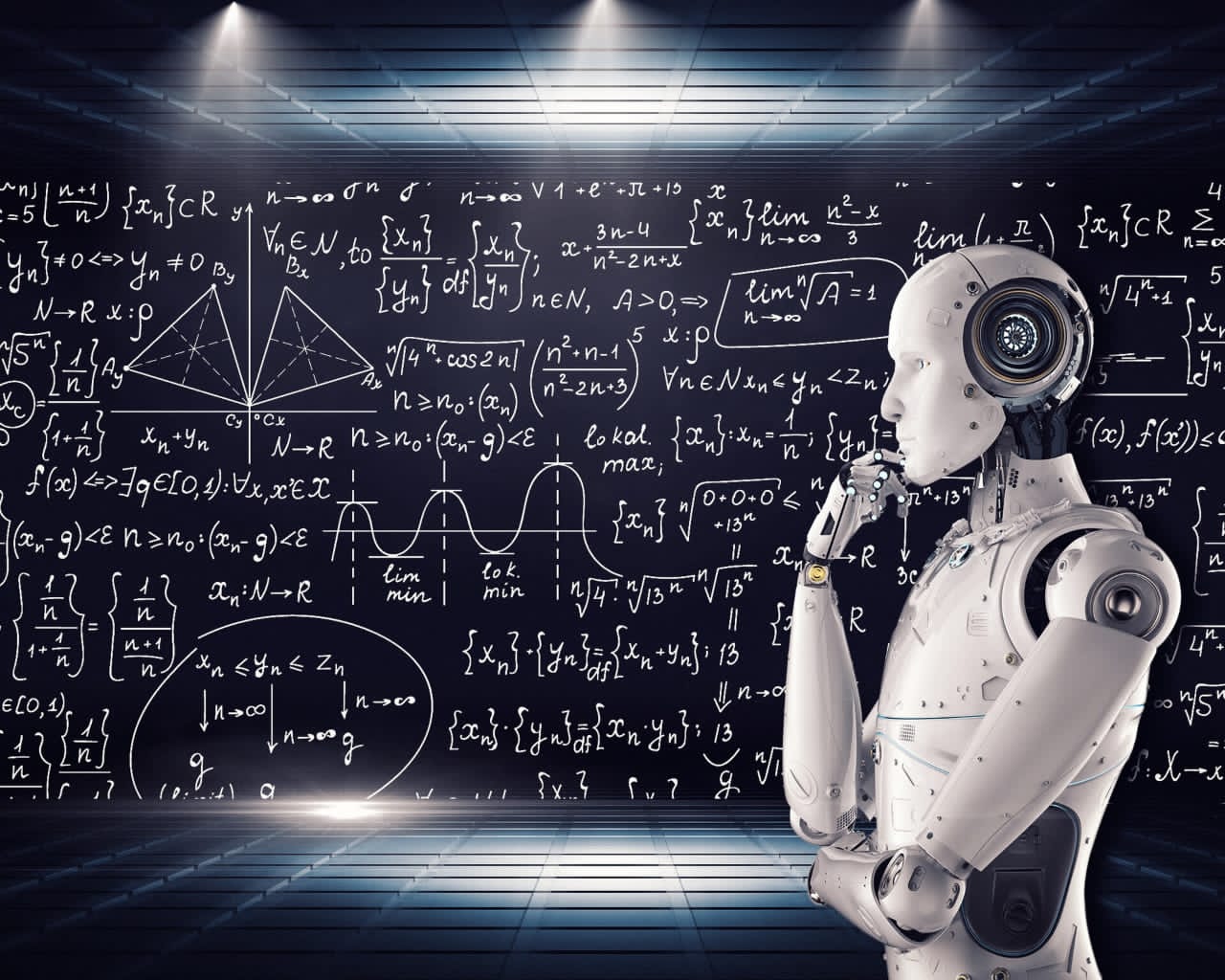
Introduction
In recent years, science and technology have developed rapidly, changing how people live, communicate, and work.
One of the most important technological developments today is Artificial Intelligence (AI). Artificial Intelligence refers to
computer systems designed to perform tasks that normally require human intelligence, such as learning, problem‑solving,
recognizing images, and understanding language.
Many people interact with AI every day without realizing it. When a phone suggests the next word while typing, when streaming
platforms recommend movies, or when navigation apps suggest the fastest route, AI is working in the background. Despite these
abilities, AI still depends greatly on human reasoning to function effectively.
Understanding Artificial Intelligence in Simple Terms
Artificial Intelligence allows machines to imitate certain aspects
of human thinking. However, machines do not truly think or understand the world the way humans do. Instead, they analyze
patterns from large amounts of information.
One important branch of AI is Machine Learning. In machine learning, computers study large datasets and learn patterns from
them. For example, an AI system trained with thousands of images can learn how to recognize faces or objects.
Another key area is Natural Language Processing, which allows machines to understand and respond to human language. This
technology powers chatbots, translation tools, and voice assistants.
Why AI Still Relies on Human Reasoning
Although AI systems can process large amounts of information quickly, they do not
possess independent reasoning like humans.
Human experts play a major role in building and guiding AI systems.
Humans decide what problems AI should solve, what data the system should learn from, how the algorithms should work, and how
to correct errors or bias in the system. Without human guidance, AI would not know what to learn or how to apply its knowledge.
Limitations of Artificial Intelligence
Even though AI is powerful, it still has several limitations when compared to human
thinking. AI cannot genuinely understand human emotions or social relationships. Humans can show empathy and make moral
judgments, while machines only follow programmed patterns.
Human creativity is also difficult for machines to replicate. While AI can generate content or analyze patterns, original
ideas often come from human imagination and experience. AI systems also depend heavily on the quality of the data used to
train them, which means incorrect data can produce incorrect results.
Humans and AI Working Together
Instead of replacing humans, the future of technology involves collaboration between
humans and AI. AI can analyze huge amounts of information quickly and identify patterns that might take humans much longer
to discover.
Humans contribute creativity, ethical judgment, emotional understanding, and critical thinking. When both work together,
they can solve complex problems more effectively. In healthcare, for example, AI can help doctors analyze medical images,
but doctors still rely on their training and reasoning to make final decisions.
Conclusion
Artificial Intelligence is one of the most significant innovations in modern science and technology.
However, AI does not operate independently. It depends heavily on human reasoning for its design, training, and responsible
use.
Rather than replacing humans, AI should be seen as a tool that supports and enhances human intelligence. The best results
come from combining the speed and analytical power of machines with the creativity and reasoning abilities of people.
References
IBM. (2023). What is Artificial Intelligence?
Stanford University. (2024). Artificial Intelligence Index Report.
Massachusetts Institute of Technology. Research on Human‑AI collaboration.
World Economic Forum. (2023). Artificial Intelligence and the Future of Work.
McKinsey & Company. (2023). The State of AI Report.